Top Emergency Electricians in Lenoir, NC, 28633 | Compare & Call

McMillon Electric Company
B. J. A. and Sons Electric
Common Questions
I have a 100-amp Federal Pacific panel from 1971. Can I safely add a Level 2 EV charger or a new heat pump?
No, you cannot safely add those major loads with your current setup. A Federal Pacific panel is a known fire hazard due to breakers that fail to trip, and the 100-amp service is already at capacity for a 1971 home. Installing a 240-volt Level 2 EV charger or a heat pump requires a full service upgrade to 200 amps and the mandatory replacement of that recalled panel. This upgrade provides the dedicated circuits and modern AFCI protection required by the current NEC.
What permits and codes are involved in replacing my electrical panel in Lenoir?
All panel replacements require a permit from the City of Lenoir Planning and Development Department and must be installed to the 2023 NEC standards. As a master electrician licensed by the North Carolina State Board of Examiners, I handle the entire process: filing the detailed permit application, scheduling the rough and final inspections with the city, and ensuring the installation passes code. This legal framework exists for your safety, guaranteeing the work meets current standards for overcurrent protection, AFCI/GFCI requirements, and proper grounding.
My 1971 home in Downtown Lenoir has original wiring and keeps tripping breakers when I run the microwave and air conditioner. What's the real problem?
Your home's electrical system is 55 years old, which is the core issue. The NM-B Romex wiring installed in 1971 was designed for a different era, with far fewer high-wattage appliances. Modern kitchens and HVAC systems in Downtown Lenoir homes now demand more power than these original 100-amp panels and branch circuits were ever meant to handle. This constant overloading trips breakers and creates a genuine fire risk due to overheated wires.
How should I prepare my Lenoir home's electrical system for winter ice storms and summer brownouts?
Preparation focuses on backup power and surge protection. For extended outages from ice storms, a properly installed generator with a transfer switch is the most reliable solution. During summer peak AC loads, brownouts (low voltage) can damage compressor motors in your HVAC and refrigerator. A whole-house surge protector is critical year-round to guard against utility grid switching during these events. Ensuring your panel and connections are in good health prevents minor issues from becoming major failures when the grid is stressed.
Does the hilly terrain around Downtown Lenoir affect my home's electrical system?
Yes, the rolling foothills terrain can impact system health in two key ways. First, properties on slopes often have longer, more complex grounding electrode runs to reach suitable soil, which is crucial for safety during a lightning strike or fault. Second, heavy tree canopy common in these areas can cause interference on overhead service lines during high winds. We verify your grounding system's resistance and ensure tree limbs are cleared from service drops to maintain reliability.
The power is out and I smell something burning near my panel in Downtown Lenoir. How fast can a master electrician get here?
For an emergency like a burning smell, we dispatch immediately. From Lenoir City Hall, we can be at most Downtown addresses in 5-8 minutes using US-321 for quick access. Your first action should be to shut off the main breaker at the panel if it's safe to do so, as this smell often indicates a failing connection or overloaded bus bars. We'll diagnose the source, which could be anything from a loose wire to a failing Federal Pacific panel, and make the area safe.
I see the overhead power lines coming to my house. What should I know about this type of electrical service?
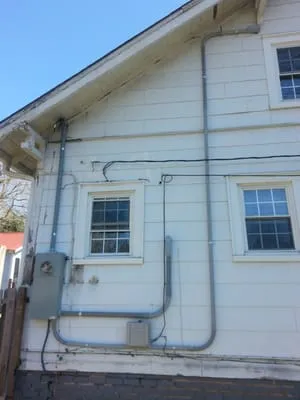
Overhead mast service is standard here, but it has specific vulnerabilities. The masthead and weatherhead on your roof are critical points where the Duke Energy lines connect to your home; if damaged or aged, they can let in moisture. The overhead lines are also exposed to falling limbs and wind. During any panel upgrade or major repair, we inspect this entrance equipment for corrosion and physical integrity, as it must be upgraded to support a modern 200-amp service if your current mast is undersized.
Why do my lights flicker and my smart devices reboot during thunderstorms here in Lenoir?
Flickering lights and device reboots are symptoms of voltage sags and micro-surges on the Duke Energy grid, which are common during our seasonal thunderstorms. These fluctuations are hard on modern electronics with sensitive microprocessors. While Duke manages the main grid, protecting your home requires a layered defense: a whole-house surge protector at your service entrance to stop large surges, and point-of-use protectors for sensitive electronics to filter out smaller, damaging noise.
