Top Emergency Electricians in Torrington, CT, 06759 | Compare & Call




Bell Electrical Contractors
Question Answers
What permits are needed for an electrical panel upgrade in Torrington, and who handles that?
Any panel replacement or service upgrade in Torrington requires a permit from the Torrington Building Department and a final inspection to comply with the 2023 NEC. As a Master Electrician licensed by the Connecticut Department of Consumer Protection, I manage the entire permit process for homeowners. This ensures the work is documented, meets current safety codes for AFCI protection and grounding, and protects your home's value and insurability.
Why do my lights dim when I run the microwave in my 1960s Highland Park home?
Your home's original 1962 electrical system uses cloth-jacketed copper wiring, which is now 64 years old. While the copper itself is still conductive, the insulation is brittle and cannot safely handle the cumulative load of modern appliances like air fryers, computers, and microwaves running simultaneously. This often causes voltage drop, seen as dimming lights, because the 100-amp service panel from that era lacks the circuit capacity we rely on today.
My power is out and I smell burning plastic—how fast can an electrician get to my house near Coe Park?
For an emergency like a burning smell, we prioritize immediate dispatch. From our starting point near Coe Memorial Park, we use Route 8 to reach most Highland Park addresses within 5 to 8 minutes. The first step is to safely shut off power at the main breaker to prevent a fire, then we diagnose the source, which is often an overloaded circuit or a failing connection in an old panel.
My smart TV keeps resetting during storms—is this an Eversource problem or my house wiring?
This is likely a combination. Eversource's overhead grid in our area is exposed to moderate surge risks from seasonal ice storms, which can cause momentary dips or spikes in voltage. However, your 1960s-era wiring and panel likely lack modern whole-house surge protection. Sensitive electronics like smart TVs and computers need this layered defense to filter utility-side surges and protect against internal surges from appliances like your HVAC system kicking on.
I have overhead lines to my house—what should I watch for with my electrical service?
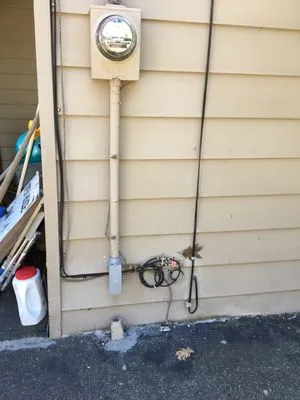
With an overhead mast service, you should visually inspect where the utility lines connect to your house. Look for any sagging, frayed wires, or damage to the weatherhead conduit. Heavy ice accumulation or falling tree limbs in our wooded lots can strain these connections. Ensure the mast is securely anchored to the structure; a loose mast can rip away, causing a dangerous service entrance fault that requires immediate repair by a licensed electrician.
Can my 100-amp panel from 1962 safely add a car charger or a new heat pump?
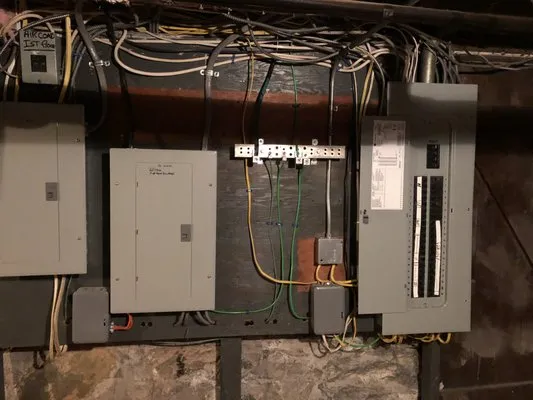
Safely adding a Level 2 EV charger or a heat pump to a 100-amp panel from 1962 is highly unlikely. These devices require substantial, dedicated circuits. More critically, many Torrington homes from that era still have Federal Pacific Electric (FPE) panels, which are a known fire hazard due to breakers that can fail to trip. A full service upgrade to 200 amps is typically the necessary and code-compliant first step for such additions.
How should I prepare my home's electrical system for a Torrington ice storm and winter brownouts?
Winter preparedness starts with a professional assessment of your service mast, panel, and heating system connections, as demand surges during 5°F lows. We recommend installing a transfer switch for a standby generator to maintain heat and refrigeration during an outage. For brownouts, which are prolonged low voltage, having a licensed electrician verify your critical circuits and connections can prevent damage to motors in furnaces and refrigerators.
Could the rocky, hilly soil near my home affect my electrical grounding?
Yes, absolutely. The rocky hillside terrain common around Coe Park and Highland Park can challenge proper grounding. The National Electrical Code requires a low-resistance connection to earth via grounding electrodes. In rocky soil, achieving this often requires specialized installation techniques or additional rods to ensure your grounding system can safely divert a lightning strike or fault current, which is a critical layer of protection for your entire electrical system.
