Top Emergency Electricians in East Hartford, CT, 06108 | Compare & Call


FAQs
My East Hartford home's wiring is from 1962. Why do my lights dim when I run the microwave?
Your 64-year-old cloth-jacketed copper wiring in Highland Park was designed for a different era. Modern appliances like microwaves and air conditioners draw far more power than 1960s standards anticipated. This causes voltage drop over the old conductors, which manifests as dimming lights. Upgrading the circuits serving these high-demand appliances is a common and necessary fix for homes of this vintage.
I have an old 100-amp Federal Pacific panel. Can I add an EV charger or a heat pump?
With a Federal Pacific panel, which is a known fire hazard and no longer listed for use, adding any major load like an EV charger or heat pump is not just difficult—it's unsafe. The panel must be replaced first. Even with a new panel, a 100-amp service from 1962 is typically insufficient for a Level 2 EV charger alongside modern home loads. A full service upgrade to 200 amps is the standard, safe solution for Highland Park homes adding electrification.
We live in the rolling valley near the river. Could that affect our home's electrical grounding?
The terrain in the Great River Park area, with its varied soil moisture and composition, directly impacts grounding electrode effectiveness. A ground rod that performs well in wet clay may be insufficient in rocky or sandy soil, leading to a high-resistance ground. This can compromise surge protection and equipment safety. We test ground resistance as part of any service evaluation and may need to install additional electrodes to meet code.
How should I prepare my East Hartford home's electrical system for a severe ice storm or summer brownout?
For winter ice storms that can bring down lines, a properly installed and permitted generator with a transfer switch is key. For summer AC peaks that strain the grid, ensuring your panel and wiring are in good health helps prevent overheating during sustained high loads. In both cases, installing AFCI breakers, which are now required in most circuits, adds a critical layer of fire prevention for aging wiring under stress.
What's involved in getting a permit for an electrical panel upgrade in East Hartford?
The process starts with a licensed electrician filing detailed plans with the East Hartford Inspections and Permits Department. The work must comply with the 2023 NEC, Connecticut amendments, and all local codes. After installation, the work is inspected for safety and compliance. As a Master Electrician licensed by the Connecticut Department of Consumer Protection, I handle this entire process, ensuring the upgrade is documented correctly for your home's records and future sales.
My power line comes in overhead on a mast. What are the common issues with this setup?
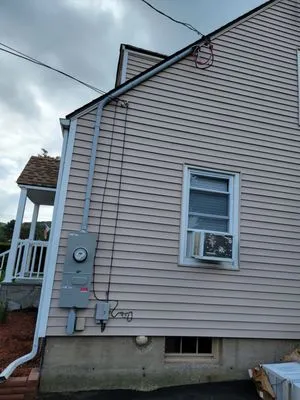
Overhead service masts, common in East Hartford, are exposed to weather and tree contact. We frequently see damaged mast heads, loose service cable connections, or mast arms pulling away from the house. These are urgent repair items, as they can lead to service drop wires pulling loose. Any work on the mast or service entrance conductors requires coordination with Eversource and a permit from the East Hartford Inspections Department.
My smart devices keep resetting during thunderstorms. Is this an Eversource grid problem or my wiring?
While Eversource manages the grid, Connecticut's moderate surge risk from seasonal thunderstorms means spikes can enter your home. If your sensitive electronics are affected, your internal wiring likely lacks proper whole-house surge protection. These devices should be installed at your main service panel to defend against external grid events and internal surges from large appliances cycling on and off.
I smell something burning from an outlet in Highland Park. How fast can an electrician get here?
A burning smell is an electrical emergency requiring immediate response. From our dispatch near Great River Park, we can typically be at your door in 8 to 12 minutes via I-84. Our first priority is to safely de-energize the affected circuit and locate the source of overheating to prevent a potential fire. This kind of fault is often caused by loose connections or failing devices in older systems.
