Top Emergency Electricians in Fairfax, VA, 22030 | Compare & Call

Poppy's Family Electric Service

Dependable One Electrical Inc
ACES Electrical Services
Question Answers
How should we prepare our home's electrical system for Northern Virginia's ice storms and summer brownouts?
Preparation focuses on backup power and surge protection. For winter ice storms that can knock out overhead lines, a properly installed generator with a transfer switch is the best solution for maintaining heat and refrigeration. Summer brownouts from peak AC demand stress motors and electronics. Ensuring your HVAC system is on a dedicated, properly sized circuit helps, but a whole-house surge protector is non-negotiable to guard against the voltage fluctuations that accompany both ice storm restoration and grid instability.
What permits and codes are involved for a major electrical upgrade in the City of Fairfax, and who handles that process?
All major work requires a permit from the City of Fairfax Community Development and Planning Department and must comply with the NEC 2020, which is enforced in Virginia. This includes service upgrades, panel replacements, and new circuits for EV chargers or generators. As a Master Electrician licensed by the Virginia DPOR, I manage the entire permit process—from the initial application and load calculations to scheduling inspections with the city. This ensures your installation is documented, safe, and fully compliant, protecting your home's value and insurability.
Our power comes from an overhead line to a mast on the roof. What are the common issues with this setup in a suburban neighborhood like ours?
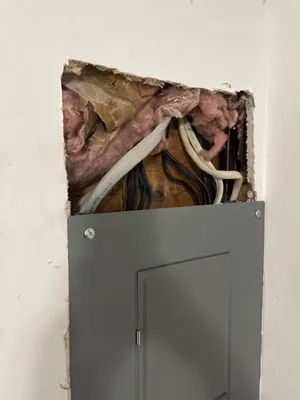
Overhead service drops, common in Fairfax City, are exposed to tree limbs, weather, and animal activity. The mast itself must be securely anchored; winter ice loads can strain it. The service entrance cables where they enter the weatherhead can degrade over nearly 40 years, leading to water intrusion or corrosion at the connections. Inside, the main service panel should be located as close as possible to where the mast enters the building to minimize the length of unprotected, high-amperage conductors running through your walls.
We live in the rolling piedmont area near Old Town Hall. Could our hilly, rocky property be affecting our home's electrical grounding?
Yes, the terrain here can directly impact grounding effectiveness. Rocky or shallow soil in the piedmont region often leads to high soil resistance, which can compromise your grounding electrode system. A proper ground is vital for safety and for surge protectors to function correctly. We may need to drive additional ground rods or use a concrete-encased electrode (ufer ground) to achieve a low-resistance path to earth, ensuring your electrical system safely dissipates fault currents and lightning strikes.
Our Fairfax City Central home was built around 1989. Are the original circuits and wiring still safe for today's electronics and appliances?
Your home's electrical system is now about 37 years old. Original NM-B Romex wiring from that era is generally safe if undisturbed, but the capacity is often inadequate. Homes in this neighborhood were built for a different standard of living—fewer kitchen gadgets, no home office server racks, and certainly no multiple high-speed EV chargers. Modern 2026 appliance loads can easily overload those original 15-amp and 20-amp kitchen and laundry circuits, leading to frequent breaker trips and potential overheating at connections.
We've lost all power and there's a burning smell coming from the panel. How fast can an electrician get to our house near Old Town Hall?
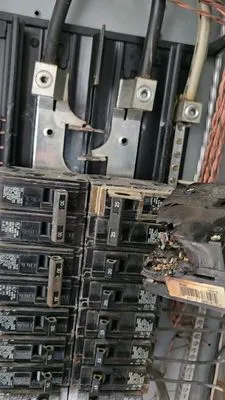
For an emergency like a burning smell, which indicates an active fire hazard, we dispatch immediately. From our starting point near the Old Town Hall, we can typically be on-site in Fairfax City Central within 5 to 8 minutes using I-66 for rapid access. The first priority is to safely isolate the problem at your meter or main breaker to prevent further damage. We then perform a thorough diagnostic to identify the failed component, whether it's a melted bus bar connection, a faulty breaker, or overloaded wiring.
Our lights in Fairfax dim or flicker when the AC kicks on, and we've had a few electronics get fried. Is this a problem with Dominion Energy's grid?
While Dominion Energy's grid in our area faces moderate surge risks from seasonal thunderstorms, consistent flickering is usually a localized issue. It often points to an overloaded circuit, a loose neutral connection at your panel or meter, or undersized wiring struggling with the compressor's startup surge. These voltage sags and spikes are particularly hard on modern smart home electronics and computers. A whole-house surge protector installed at your panel is a critical defense, but diagnosing the root cause of the flickering is key to a permanent fix.
We have a 150-amp panel from 1989 and are thinking about adding a heat pump and an EV charger. Is our current electrical setup safe for that?
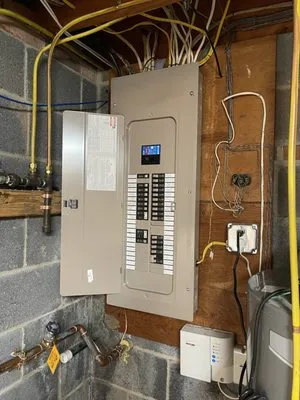
A 1989-vintage 150-amp service is at its functional limit for those additions. Installing a Level 2 EV charger (40-50 amps) and a heat pump (30-50 amps) would likely require a service upgrade to 200 amps. More critically, we must first inspect for a Federal Pacific panel, which is a known and recalled fire hazard common in homes from that period. These panels must be replaced before adding any significant load. A full assessment of your bus bar capacity and existing circuit loads is the essential first step.
