Top Emergency Electricians in Beaufort, SC, 29901 | Compare & Call


Apex Electric of SC
Questions and Answers
My overhead service mast looks old. What should I watch for with overhead lines in my neighborhood?
Inspect the mast head and conduit for rust, and check that the service drop cables are clear of tree branches. Overhead services are common here and are vulnerable to storm damage and wear. The mast itself must be rated and secured to handle the tension of the utility lines. Any sagging, damage, or vegetation contact should be addressed promptly, as it can lead to a service outage or become a fire hazard.
My home inspector flagged my Federal Pacific panel. Can I still add a Level 2 EV charger or a heat pump?
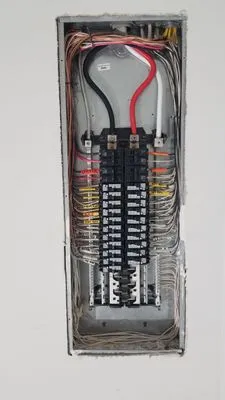
No, you cannot safely add major new loads to a Federal Pacific panel. These panels are a known fire hazard due to faulty breakers that can fail to trip. Even if your panel is labeled as 100-amp, its actual capacity is compromised. Installing an EV charger or heat pump requires a full service upgrade to a modern 200-amp panel with AFCI/GFCI protection, which is the only safe path forward for your 1980 home.
Does the flat, damp soil near the waterfront affect my home's electrical grounding?
Yes, the flat coastal plain and high water table near the Waterfront Park create ideal conditions for grounding electrode corrosion. Your home's grounding rods and clamps, especially on a 1980 system, may have deteriorated, raising resistance and compromising safety. We test grounding electrode system resistance to ensure it can safely shunt a lightning strike or fault current into the earth, which is vital for surge protection and breaker operation.
My 1980s home in The Point has the original wiring. Why do my lights dim when the refrigerator and microwave run at the same time?
Homes in The Point built around 1980 have 45-year-old NM-B Romex circuits that were sized for far fewer appliances. A 1980s kitchen might have had one 15-amp circuit; today, a refrigerator, microwave, dishwasher, and toaster oven can easily overload that single circuit, causing voltage drop and dimming lights. The original 100-amp service panel, while common for its time, struggles to meet the simultaneous demands of modern 2026 kitchens, home offices, and entertainment systems.
My power went out and I smell something burning from an outlet. How fast can an electrician get here?
For an active burning smell, we dispatch immediately. From our shop near Henry C. Chambers Waterfront Park, we can typically be at your home in The Point within 5 to 8 minutes using US-21. That rapid response is critical for isolating the fault and preventing a fire. Please turn off the breaker for that circuit if it's safe to do so and meet us outside.
How should I prepare my home's electrical system for a summer brownout or an ice storm?
For summer AC peaks, ensure your HVAC system is on a dedicated, properly sized circuit and consider a hardwired surge protector to guard against grid fluctuations. For winter ice storms that can bring down lines, a permanently installed generator with an automatic transfer switch is the safest backup. Portable generators require a manual interlock kit to prevent back-feeding power to the grid, which is a deadly risk for utility workers.
I want to upgrade my electrical panel. What permits are needed from the City of Beaufort?
A service panel upgrade always requires a permit from the City of Beaufort Building Codes Department. As a Master Electrician licensed by the SC Department of LLR, I handle the application, the required inspections, and ensure the installation meets NEC 2020 code. This process validates the safety of the work for your insurance and is not a step to bypass, especially when replacing a hazardous Federal Pacific panel.
My lights in Beaufort flicker during storms. Is this damaging my new smart TV and computer?
Flickering often indicates loose connections or grid disturbances from Dominion Energy South Carolina. Given our high lightning surge risk on the coastal plain, these voltage fluctuations absolutely can damage sensitive electronics. A whole-house surge protector installed at your main panel is the primary defense, supplemented by point-of-use protectors for critical devices. This layers your protection against both external strikes and internal wiring issues.
