Top Emergency Electricians in Scranton, PA, 18411 | Compare & Call


Scranton Electric Heating & Cooling Services
FAQs
Our lights in Scranton flicker when the refrigerator or air conditioner kicks on, and my smart TV recently reset during a storm. Is this a problem with PPL's grid?
Flickering when a major appliance starts is usually a sign of voltage drop within your home's wiring, often related to older circuits or loose connections. The storm-related surge that reset your TV is a separate issue tied to PPL's moderate grid risk from seasonal lightning. While utility fluctuations happen, your home's first defense is proper internal wiring and a whole-house surge protector installed at the main panel. This protects sensitive electronics from both external spikes and internal surges.
We have overhead power lines coming to our house in the Hill Section. What are the common issues with this setup compared to underground service?
Overhead service lines, or masts, are common in older Scranton neighborhoods. The primary issues are exposure to falling tree limbs, ice damage, and animal contact, which can cause outages. Visually inspect the mast where it attaches to your house for rust or sagging. While underground service is less prone to weather interruptions, updating an overhead system involves ensuring the mast and service entrance cables are up to current code for capacity and clearance, especially before a panel upgrade. Both service types require proper drip loops and weatherheads to prevent water infiltration.
We lost all power in our Hill Section house and smell something burning from the panel. How fast can an electrician get here?
For an emergency like a burning smell, we treat it as a priority dispatch. From our starting point near the University of Scranton, we can typically be at your door in 5 to 8 minutes using I-81. Your first step is to call PPL Electric Utilities at 1-800-DIAL-PPL to disconnect power at the meter if it's safe to do so, then call us. A burning odor often indicates a failing connection at the main lugs or bus bars, which is an immediate fire risk.
How should we prepare our Scranton home's electrical system for ice storms and winter brownouts when heating demand is highest?
Winter peaks strain both the grid and your home's electrical system. For ice storms, ensure your overhead service mast and connections are secure; heavy ice accumulation can pull lines down. To prepare for brownouts, consider a professionally installed standby generator with an automatic transfer switch. This keeps essential circuits like heat and refrigeration running. We also recommend installing AFCI breakers for fire prevention, as older wiring is more vulnerable under the continuous high load of winter heating.
We live on a rocky hillside near the University. Could the terrain be affecting our home's electrical grounding or power quality?
Rocky soil presents a significant challenge for achieving a proper grounding electrode system, which is essential for safety and surge dissipation. Driving ground rods into shallow, rocky earth often results in high resistance. We typically need to use specialized techniques, like a ground ring or chemical electrodes, to meet NEC requirements. Furthermore, hillside locations with dense tree canopy can lead to more frequent tree-to-line contact during storms, causing momentary outages or interference that sensitive electronics may register as poor power quality.
Our 1938 home has a 60-amp panel that might be a Federal Pacific brand. Can we add a Level 2 EV charger or a new heat pump system safely?
Safely installing a Level 2 charger or a heat pump is not possible with your current setup. A 60-amp service is insufficient for these high-demand appliances, and Federal Pacific panels are known for faulty breakers that fail to trip during an overload, creating a serious fire hazard. The project requires a full service upgrade to at least 200 amps, replacement of the recalled panel, and new circuit runs. We start by coordinating the upgrade with PPL before any new equipment is installed.
What permits and codes are involved in replacing our old electrical panel here in Scranton, and who handles that process?
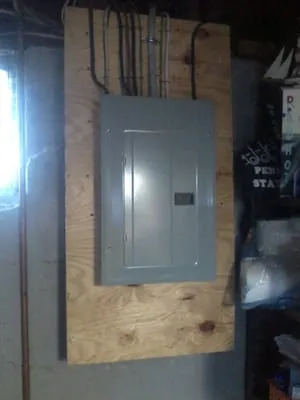
A panel replacement requires an electrical permit from the Scranton Department of Licensing, Inspections and Permits, and the work must comply with the current NEC 2020 code, as enforced by the Pennsylvania Department of Labor and Industry. As your licensed electrician, we manage the entire permit process—filing the application, scheduling the rough and final inspections, and ensuring the installation passes. This includes proper labeling, AFCI/GFCI protection where required, and coordination with PPL for the meter disconnect and reconnect. You should never proceed without these permits, as unpermitted work can void insurance and create safety issues.
Our home in the Hill Section was built around 1938 and still has knob & tube wiring. Why do our lights dim when we run the microwave and space heater at the same time?
Your electrical system is nearly 90 years old, and knob & tube wiring was designed for a much lower electrical demand. Modern 2026 appliances, like space heaters and microwaves, draw significant current on circuits that were never intended for them. This overload causes voltage drop, which you see as dimming lights. Upgrading the wiring and service panel is the only permanent solution to safely meet today's electrical loads.
