Top Emergency Electricians in Logan, OH, 43138 | Compare & Call


Hocking Electric
Ed Green Electric
Frequently Asked Questions
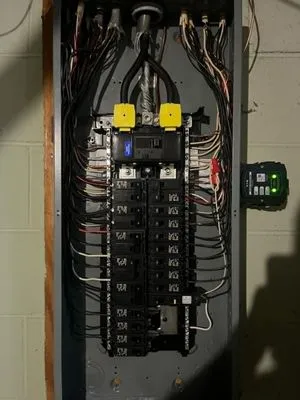
I have an old Federal Pacific panel and want to install an EV charger. Is my 1961 home's wiring safe for this?
A Federal Pacific panel is a known safety risk and should be replaced regardless of other plans. On its own, a 100-amp service from 1961 cannot safely support the 40-50 amp dedicated circuit required for a Level 2 EV charger, especially if you also use electric heat or an air conditioner. The project requires a full service upgrade to at least 200 amps, a new code-compliant panel, and a dedicated circuit run. It's a necessary investment for safety and functionality.
Do I need a permit from the Hocking County Building Department to replace my electrical panel?
Absolutely. A panel replacement always requires a permit and subsequent inspection. This ensures the work complies with the current NEC 2023, which has specific requirements for AFCI protection, grounding, and working clearances. As a master electrician licensed by the Ohio Construction Industry Licensing Board, I handle pulling the permit, scheduling inspections, and providing you with the documentation for your records. This process is not red tape; it's a vital layer of safety verification for your home.
My Downtown Logan home has overhead power lines coming to a mast on the roof. What should I watch for?
Overhead service masts are common here. Regularly inspect where the mast meets the roof for rust, cracks, or separation that could let water in. Also, watch for tree limbs from our dense canopy contacting the service drop lines; this can cause power flickers and is a fire risk. Have an electrician check the mast's structural integrity and the weatherhead's seal during your next service inspection. Keeping this entrance point secure prevents major water damage and service interruptions.
Does the hilly terrain near the Hocking County Courthouse affect my home's electrical grounding?
Yes, the rocky, Appalachian foothill soil can challenge grounding effectiveness. Proper grounding requires low-resistance contact with the earth, which is harder to achieve in shallow, rocky soil. An electrician may need to drive grounding rods deeper or use additional rods to meet NEC requirements. This is a critical safety system that ensures fault current has a safe path to earth, especially during lightning strikes or utility line contact.
My Logan home was built in 1961. Why do my lights dim when the air conditioner starts?
Your 65-year-old electrical system was designed for a different era. The original cloth-jacketed copper wiring and 100-amp panel were adequate for the time, but they lack the capacity for today's concurrent loads. Modern kitchens, home offices, and HVAC equipment draw more power, causing voltage drops that appear as dimming lights. Upgrading the service and panel addresses this by providing the stable, robust power your home now demands.
How can I prepare my Logan home's electrical system for summer brownouts and winter ice storms?
Start with a professional assessment of your main panel and grounding. For summer peaks, ensuring your HVAC system is on a properly sized, dedicated circuit prevents overloads. For winter storm preparedness, a professionally installed generator with a transfer switch is the most reliable solution. Never use a portable generator plugged into a wall outlet, as it can back-feed the grid and endanger utility workers. These upgrades provide resilience for both peak seasons.
I'm smelling something burning from an outlet in my Downtown Logan house. Who can get here fast?
For a burning smell, treat it as an active fire hazard. Turn off the breaker for that circuit immediately if it's safe to do so. A local master electrician can typically dispatch from near the Hocking County Courthouse and be at your door within 3-5 minutes using US-33. This rapid response is critical to diagnose and isolate a failing connection before it causes an arc fault or fire.
My smart TVs and routers keep resetting during Logan thunderstorms. Is this an AEP Ohio grid problem or my wiring?
It's likely a combination of both. The AEP Ohio grid in our hilly region is exposed to moderate surge risk from seasonal thunderstorms. While some flicker is grid-related, your 1961 wiring lacks the integrated surge protection modern electronics need. Installing a whole-house surge protector at your main panel is the first line of defense, supplemented by point-of-use protectors for sensitive equipment. This layered approach shields your devices from external surges and internal spikes.
