Top Emergency Electricians in Getzville, NY, 14068 | Compare & Call

Frequently Asked Questions
My North Getzville home was built around 1981. Why do my lights dim when I run the microwave and the toaster oven at the same time?
Your home's electrical system is about 45 years old. The original NM-B Romex wiring and 100-amp service panel were designed for a different era, with far fewer high-draw appliances. Modern kitchens, with multiple countertop devices and high-efficiency refrigerators, often exceed the capacity of these original circuits. This can cause voltage drop, which appears as dimming lights and puts strain on motors and electronics.
If I upgrade my electrical panel in Getzville, what permits are needed and who handles the inspection?
All major electrical work in the Town of Amherst requires a permit from the Building Department and must comply with the 2020 National Electrical Code. As a New York State-licensed Master Electrician, I pull the permits, schedule the inspections, and ensure the work passes code. This legal process isn't just red tape—it provides an independent verification of safety for you and future homeowners, and it's a non-negotiable part of professional, compliant work.
My lights just went out and I smell something burning from an outlet. How fast can an electrician get here?
For a burning smell, I'll dispatch immediately from the University at Buffalo North Campus area. Using I-990, I can typically be at your North Getzville home in 8 to 12 minutes. The priority is to safely disconnect power to the affected circuit and locate the source, which is often a loose connection or failing device overheating inside a wall.
How can I prepare my Getzville home's electrical system for a winter ice storm or a brownout?
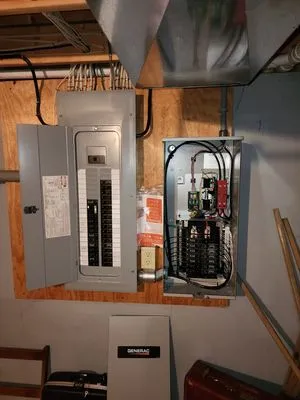
Winter peaks here can strain the grid. For brownouts, consider installing a manual transfer switch and a portable generator to back up essential circuits like your furnace, refrigerator, and some lights. Ensure your generator is never plugged into a household outlet—that's backfeeding, which is extremely dangerous to utility workers. For ice storms that may cause longer outages, a permanently installed standby generator is the most robust solution.
My home inspector mentioned a Federal Pacific panel. Is this a fire hazard, and can my 100-amp system handle adding an EV charger?
Federal Pacific panels, common in homes from the 1970s and 80s, have a known failure rate where breakers may not trip during an overload or short circuit, creating a significant fire risk. Regarding EV charging, a 100-amp service from 1981 is insufficient for a Level 2 charger. Adding one would require a full service upgrade to 200 amps, which also necessitates replacing that Federal Pacific panel—a critical safety upgrade on its own.
We're on a flat, open lot near UB North Campus. Does the terrain affect our home's electrical grounding?
The flat glacial plain in North Getzville generally provides good soil conditions for grounding electrodes. However, the key is the depth and connection of your grounding rods to the main panel. Over decades, these connections can corrode, increasing electrical resistance. A proper ground test during a panel inspection or upgrade verifies your system can safely divert fault currents, which is crucial for protecting both people and equipment.
My power comes from an overhead line to a mast on my roof. What are the common issues with this setup?
Overhead service drops, while common in our suburban setting, are exposed to weather and tree contact. The masthead where the utility wires connect can loosen over time, and the service entrance cables can degrade. During an inspection, I check the mast for proper support, the weatherhead seal for integrity, and the cable condition from the mast down to your meter. Ensuring these components are sound prevents water infiltration and connection failures.
I live in Getzville and my smart lights and router keep resetting. Is this a problem with National Grid's power quality?
National Grid serves our area reliably, but the local grid is subject to moderate surge risks from seasonal ice storms and normal switching operations. These micro-surges and brief voltage fluctuations are often imperceptible to incandescent bulbs but can disrupt sensitive smart home electronics. Installing whole-house surge protection at your main panel is a recommended defense, safeguarding your investment in modern technology.
