Top Emergency Electricians in Wall, NJ, 07719 | Compare & Call

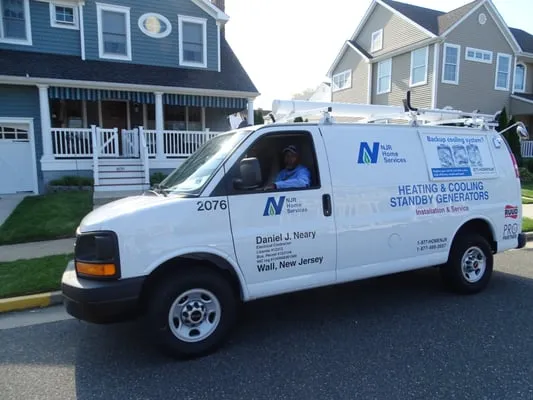
NJR Home Services
Frequently Asked Questions
What permits and inspections are required for a panel upgrade in Wall Township, and why can't I just do it myself?
In Wall Township, any panel replacement or service upgrade requires a permit from the Wall Township Building Department and mandatory inspections to verify NEC 2023 compliance. This is not DIY work; New Jersey law requires all such work to be performed by a licensed electrician holding a credential from the State Board of Examiners of Electrical Contractors. We handle the entire permit process, ensuring the installation passes rough and final inspection for your safety and for insurance coverage. Unpermitted electrical work can void your homeowner's insurance and creates a serious hazard during any future home sale.
My Wall home has overhead wires coming from a pole. What are the main electrical maintenance concerns with this setup?
Overhead service, common in Bailey's Corner, introduces specific maintenance points. The masthead where the utility lines connect to your house is vulnerable to weather damage and should be inspected for rust, secure mounting, and proper drip loop to prevent water ingress. The service entrance cables themselves can degrade after 65 years, and tree limbs contacting the overhead drop line can cause flickering or faults. During a service upgrade, we replace the mast, weatherhead, and entrance cables to modern standards, ensuring a robust connection from the utility pole to your new panel.
My lights in Wall flicker during thunderstorms, and my smart TV recently reset. Is this a problem with JCP&L or my home's wiring?
Flickering during Jersey Central Power & Light (JCP&L) grid disturbances, like our moderate seasonal thunderstorms, is common, but your home's protection is what failed. The utility's primary role is to restore service, not protect your sensitive electronics from surges that travel inside on your wiring. A whole-house surge protective device installed at your main panel is the professional solution, acting as a first line of defense to clamp damaging voltage spikes before they reach your TV or computer. This, combined with point-of-use protectors, creates a layered defense for 2026's smart home technology.
The power is out and I smell burning from an outlet in my Wall home. How fast can an electrician get to me in Bailey's Corner?
For an emergency like a burning smell, which indicates an active electrical fire risk, we treat it as a priority dispatch. From the Wall Township Municipal Complex area, we can typically be on-site in your neighborhood within 8 to 12 minutes using the Garden State Parkway for a direct route. Your first action should be to safely shut off power at the main breaker if possible and call 911, as the fire department may need to respond first. We will coordinate to meet you there for the electrical diagnosis and repair.
Our 1961 Wall home has a 100-amp panel and we want to add a Level 2 EV charger. Is our current electrical service safe and sufficient?
With a 100-amp service from 1961, adding a 40-50 amp Level 2 EV charger is not just difficult—it's a safety risk that likely requires a full service upgrade. First, we must check the panel brand; many homes from that era in this area have recalled Federal Pacific panels, which are a known fire hazard and must be replaced immediately. Even with a safe panel, a 100-amp service lacks the capacity for an EV charger, a modern kitchen, and central air without causing dangerous overloads. A standard upgrade to 200 amps is the safe, code-compliant solution that provides headroom for future needs like a heat pump.
We live on the flat coastal plain near the Municipal Complex. Does the sandy soil here affect our home's electrical grounding?
Yes, the sandy, well-drained soil common on Wall's coastal plain can significantly impact grounding effectiveness. Proper grounding requires good soil contact to dissipate fault currents, and sandy soil has higher resistance than clay or loam. This means the grounding electrode system for your home may not meet NEC 2023 standards for low resistance, which is a safety concern for surge dissipation and breaker operation. We often need to install additional grounding rods or use chemical treatments to achieve a reliable ground, which is a standard part of any service upgrade or panel replacement in the neighborhood.
How can I prepare my Wall home's electrical system for summer brownouts and winter ice storms?
Coastal New Jersey weather demands a two-part strategy for electrical resilience. For summer AC peaks that strain the grid, ensuring your panel connections and breakers are in good condition prevents heat buildup that can cause failure during a brownout. For winter preparedness, a professionally installed generator with an automatic transfer switch is the most reliable solution for ice storm outages; it keeps heat and sump pumps running safely, without the risks of using extension cords through a window. Surge protection is critical year-round to shield equipment from spikes when power is restored.
Our Bailey's Corner home in Wall still has its original 1961 cloth-wrapped copper wiring. Why do the lights dim when we run the microwave and the air conditioner together?
That's a classic sign of a 65-year-old electrical system being pushed beyond its design capacity. Cloth-jacketed copper wiring from 1961 was intended for a few lamps and an appliance or two, not the dozens of high-wattage devices we use today. The voltage drop you're experiencing happens because the original circuits can't supply enough power to modern loads simultaneously, which can lead to overheating at connections. Upgrading the panel and modern branch circuits resolves this by providing dedicated, high-capacity paths for your major appliances.
