Top Emergency Electricians in Englishtown, NJ, 07726 | Compare & Call


North East Home Services
Common Questions
How should I prepare my Englishtown home's electrical system for summer brownouts or winter ice storms?
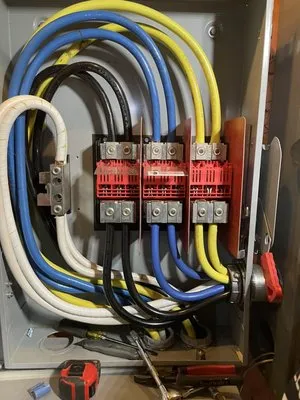
For summer peak AC loads, ensure your HVAC system is on a dedicated, properly sized circuit and consider an energy audit to balance the panel load. Winter preparedness for temperatures near 15°F involves securing external service masts and conduit against ice weight. For both seasons, installing a transfer switch for a standby generator provides critical backup power. This must be permitted through the Englishtown Building Department and installed by a licensed electrician to ensure safe isolation from the JCP&L grid, preventing backfeed that could endanger utility workers.
The lights went out and I smell something burning from an outlet. How fast can an electrician get here?
For an active electrical fire hazard, we dispatch immediately. From a central point like the Battle of Monmouth Monument, we can typically reach most Englishtown Borough Center homes in 5 to 8 minutes using NJ-33. Your first action should be to go to your main panel and shut off the breaker for the affected circuit if it is safe to do so. Do not attempt to reset a breaker that is hot to the touch or that continues to trip, as this indicates a fault that requires professional diagnosis to prevent fire or shock.
I want to add a circuit. What do I need to know about permits and codes in Englishtown?
All new circuit installations in Englishtown require a permit from the Building Department and a final inspection to close the permit. As of 2026, New Jersey enforces the NEC 2023, which mandates AFCI protection for most living area circuits and specific GFCI requirements. The work must be performed by a contractor licensed by the New Jersey Board of Examiners of Electrical Contractors. Filing the permit ensures the work is reviewed for safety and added to your home's official record, which is crucial for insurance and resale. We handle this red tape as part of our service to guarantee full compliance.
My power comes in on an overhead mast. What maintenance should I be doing, and what are the common failure points?
Overhead service masts require periodic visual inspection. Look for weathering or rust on the mast pipe, loose or sagging service drop cables from the utility pole, and cracked weatherheads where the cables enter your house. The mast is your responsibility up to the connection point with JCP&L's lines. Common failure points include sealant deterioration around the mast roof penetration, which can lead to leaks, and physical damage from tree limbs. Never attempt repairs on the service entrance conductors yourself; only a licensed electrician or the utility provider should handle these high-voltage connections.
We live on the flat coastal plain near the Battle of Monmouth site. Could the soil affect my home's electrical grounding?
The sandy, well-drained soils common on Englishtown's coastal plain can impact grounding electrode resistance. Proper grounding is essential for surge dissipation and safety. Over time, these soils may cause ground rods to corrode faster or provide higher resistance than the 25-ohm maximum required by the NEC. During a panel upgrade or inspection, we perform a ground resistance test. If readings are high, we may need to drive additional rods or use a chemical ground enhancement to ensure your system has a low-impedance path to earth, which is crucial for lightning protection and stabilizing voltage.
I think I have a Federal Pacific panel. Can my 150-amp service from 1995 handle adding a Level 2 EV charger or a heat pump?
This involves two critical safety issues. First, Federal Pacific Electric (FPE) panels have a known failure rate where breakers may not trip during an overload, creating a significant fire risk; replacement is strongly advised. Second, a 150-amp service may be insufficient for adding a 40-50 amp EV charger or heat pump circuit without a full load analysis. We must first upgrade to a modern, UL-listed panel with AFCI/GFCI protection, then calculate if your existing service entrance can support the new load or if a service upgrade to 200 amps is necessary for safe, code-compliant operation.
My smart devices keep resetting and lights flicker during storms. Is this a problem with JCP&L or my house wiring?
Moderate surge risk from seasonal thunderstorms on the Jersey Central Power & Light grid is a common factor, but your home's internal protection is the first line of defense. Flickering can indicate a loose connection at the meter, main panel, or a branch circuit, which should be inspected. For sensitive electronics, utility-side surges can bypass basic power strips. A whole-house surge protector installed at your main panel, compliant with NEC 2023 Article 242, is the recommended solution to clamp damaging voltage spikes before they reach your TVs, computers, and smart home hubs.
My Englishtown Borough Center home was built in 1995. Why do my lights dim when the air conditioner kicks on?
Your home's electrical system is now 31 years old, designed for a 1995 standard of living. Original NM-B Romex wiring is still functional, but modern loads from large-screen TVs, computer equipment, and high-efficiency HVAC compressors create a cumulative demand that older circuits weren't sized for. This voltage drop, seen as dimming lights, is a sign your 150-amp panel may be operating near its designed capacity. A load calculation can determine if your service needs an upgrade to handle today's simultaneous appliance use safely.
