Top Emergency Electricians in Austin, MN, 55912 | Compare & Call

Newry Construction
Fox Electric
Question Answers
Who responds fastest for a burning smell from an outlet near Horace Austin State Park?
For a burning smell or total power loss, call a licensed electrician immediately. A crew dispatched from the Austin Heights area can typically reach your home from near Horace Austin State Park in 5-8 minutes via I-90. Do not wait for visible flames; that odor often indicates overheating wires or a failing connection inside your walls, which is a serious fire hazard.
We live in the flat river valley. Could the soil near the river affect our home's electrical grounding?
Yes, terrain directly impacts grounding. The moist, often clay-heavy soils in our river valley can be corrosive to buried grounding electrodes over decades. A proper ground is your electrical system's safety foundation, especially for surge protection. During an inspection, we test the resistance of your grounding electrode system and may need to drive new rods or install a supplemental grounding plate to meet NEC 2023 standards.
My home in Austin Heights was built in 1956. Why do my lights dim when I use modern appliances?
Your electrical system is 70 years old and was designed for a different era. The original cloth-jacketed copper wiring, while decent for its time, lacks the capacity for today's simultaneous loads. A 100-amp service panel from 1956 is simply being asked to do too much, leading to voltage drops that cause dimming lights. Upgrading to a modern 200-amp panel with new branch circuits is the definitive solution.
My power comes from an overhead mast. What maintenance should I be aware of?
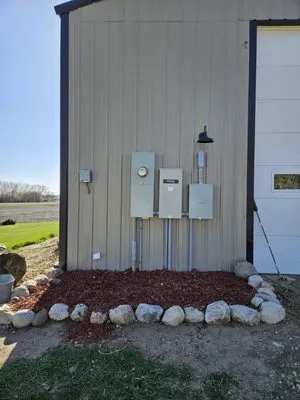
Overhead service masts require periodic visual checks. Look for any sagging or fraying of the utility drop lines between the pole and your mast head. Ensure the mast itself is still plumb and securely anchored to your structure; ice and wind can loosen it. Never attempt any work near these lines yourself. Any tree trimming near the service drop must be coordinated with Austin Utilities for safety.
What permits are needed for a panel upgrade in Austin, MN, and who handles that?
All major electrical work in Austin requires a permit from the Building and Zoning Department and a final inspection. As a Master Electrician licensed by the Minnesota Department of Labor and Industry, I manage the entire permit process for you. The work must comply with the current NEC 2023 code, which includes requirements for AFCI and GFCI protection that did not exist when your home was built. You should never hire a contractor who suggests skipping permits.
I have an old Federal Pacific panel and want to add an EV charger. Is my 100-amp service enough?
No, it is not safe or sufficient. Federal Pacific panels are known for faulty breakers that can fail to trip during an overload, creating a significant fire risk. A 100-amp service from 1956 also lacks the spare capacity for a Level 2 EV charger or a modern heat pump. The required upgrade involves replacing the recalled panel and upgrading your service entrance to 200 amps, which Austin Utilities can then connect.
My smart devices keep resetting. Is this a problem with Austin Utilities or my home's wiring?
It could be both. Austin Utilities manages a grid with moderate surge risk from our seasonal thunderstorms. Minor grid fluctuations can cause flickering lights, but sensitive electronics like smart home hubs are particularly vulnerable. First, have an electrician check your home's grounding and connections. Then, consider installing a whole-house surge protector at your main panel to defend against external and internal power spikes.
How can I prepare my Austin home's electrical system for a -25°F winter storm?
Extreme cold strains the entire electrical system. Ensure your furnace and its dedicated circuit are inspected before the heating surge. Consider installing a hardwired backup generator with an automatic transfer switch, as winter brownouts are possible. Also, verify that all exterior receptacles have proper in-use weatherproof covers to prevent moisture intrusion, which can be a major hazard when ice melts.
