Top Emergency Electricians in West Branch, MI, 48661 | Compare & Call


Common Questions
My West Branch home was built in 1973. Why are my lights dimming when the microwave and air conditioner run together?
Your original 53-year-old electrical system is likely struggling with modern demands. Downtown West Branch homes from that era were wired with NM-B Romex for 15- and 20-amp circuits, designed for far fewer appliances. Today's kitchens and home offices draw much more power, overloading those original circuits and causing voltage drops, which manifest as dimming lights. A capacity assessment can identify which circuits need dedicated lines to safely handle 2026-level loads.
I have a 100-amp panel and want to add a heat pump and an EV charger. Is my current setup safe?
A 100-amp service from 1973 is insufficient for adding a heat pump and Level 2 EV charger simultaneously; doing so would dangerously overload the system. Furthermore, many homes of that age in the area have Federal Pacific panels, which are a known fire hazard due to breakers that can fail to trip. A full service upgrade to 200 amps is the necessary first step to safely accommodate these modern, high-demand appliances and ensure code compliance.
I need a panel upgrade. What permits are required with the Ogemaw County Building Department, and does the work have to be to current code?
Any service upgrade or major panel work in Ogemaw County requires a permit and inspection from the County Building Department. As a Master Electrician licensed by Michigan LARA, I handle that filing. The work must be performed to the latest adopted code, which is currently the NEC 2023. This isn't just red tape; it ensures your installation meets modern safety standards for arc-fault protection, grounding, and load calculations, which are far more stringent than they were in 1973.
My power comes in on a masthead over the roof. What are the common issues with this setup?
Overhead mast service, standard for our area, has specific vulnerabilities. The masthead itself can be damaged by ice, wind, or falling branches, requiring repair by your utility. The service entrance cables from the weatherhead to your meter and panel are also exposed and can degrade over 50+ years. We check for proper drip loops, conduit integrity, and secure connections at the meter base to prevent water infiltration and corrosion, which are leading causes of service failure.
The power is out and I smell burning from an outlet. How fast can an electrician get here?
For a burning smell, treat it as an immediate fire hazard and call 911 first. From our dispatch near the Ogemaw County Courthouse, we can typically be on-site in Downtown West Branch within 5-8 minutes via I-75. Once the fire department has secured the area, we can isolate the fault, which is often a failing connection or overloaded wire behind the outlet, and make the necessary repairs to restore safety.
We have a lot of tall pines near our house. Could that be causing our intermittent power issues?
Yes, the heavy tree canopy common around Downtown West Branch can directly impact electrical health. Branches rubbing against overhead service lines can cause intermittent faults, noise on the line, and even momentary outages. Furthermore, tree root systems in rocky or variable soil can interfere with your home's critical grounding electrode system, compromising its ability to safely divert lightning or fault currents. An inspection can evaluate both your masthead clearance and ground rod integrity.
My smart TV and router keep resetting during storms. Is this a problem with Consumers Energy?
Grid instability from Consumers Energy, combined with our area's moderate seasonal lightning risk, can cause damaging micro-surges and brownouts. These brief voltage fluctuations are often imperceptible to lights but can disrupt or fry sensitive electronics like smart home devices. Installing a whole-house surge protector at your main panel is the most effective defense, creating a first line of protection that typical power strips cannot provide.
How can I prepare my home's electrical system for a Northern Michigan ice storm and -15°F temperatures?
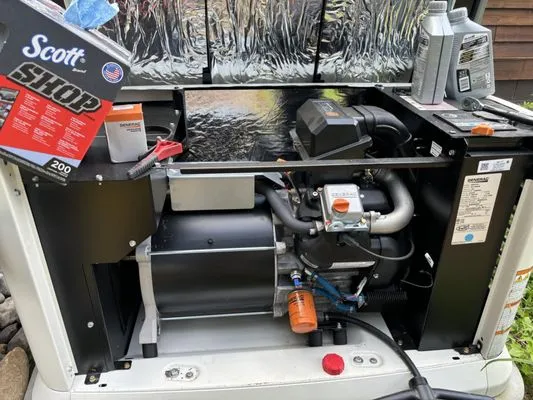
Winter heating surges and ice storm outages are a real concern. Begin by having your furnace circuit and emergency outlets inspected for secure connections to prevent failure when demand is highest. For extended outages, a properly installed generator with a transfer switch is crucial; never back-feed power through an outlet. Also, consider an AFCI/GFCI circuit breaker upgrade, as these devices significantly reduce the risk of electrical fires, which spike during winter months.
