Top Emergency Electricians in Temple Hills, MD, 20744 | Compare & Call



Q&A
How can I prepare my home's electrical system for a winter ice storm or a summer brownout?
For winter, ensure your heating system's circuit is properly maintained and consider a hardwired backup generator with a transfer switch—portable units are risky if not installed correctly. For summer, managing your 100-amp panel's load is key to avoiding overloads during heat waves. Installing that whole-house surge protector also guards against spikes when power is restored after an outage, which is a common failure point for appliances.
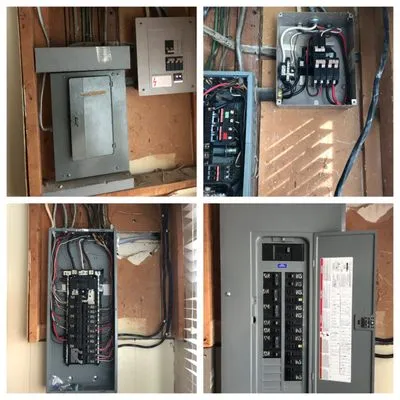
My inspector flagged my Federal Pacific panel. Can I just add a 240V outlet for an EV charger?
No, adding a Level 2 EV charger is not advisable with that setup. Federal Pacific panels have a known failure risk and should be replaced immediately for safety. Furthermore, a 1975-era 100-amp service lacks the spare capacity for a charger's 30-50 amp continuous draw. A full service upgrade to 200 amps is the necessary first step to safely support an EV charger or a modern heat pump system.
What's involved in replacing the mast and meter on my house with the overhead power lines?
Replacing an overhead mast and meter base is a coordinated process. As the master electrician, we handle all on-house work: installing the new weatherhead, mast, conduit, and meter socket to current NEC 2023 and local code. We then secure the required permit from Prince George's County and coordinate the utility disconnect and reconnect with Pepco. You'll be without power for the duration of the utility's work, which we schedule to minimize inconvenience.
Why do my lights dim when my newer refrigerator kicks on in my 1975 Hillcrest Heights home?
Your home's original NM-B Romex wiring is now over 50 years old. While the cable itself is safe if undisturbed, the 100-amp service panel it connects to was sized for far fewer appliances than a modern 2026 household demands. That refrigerator, along with computers, large-screen TVs, and other electronics, creates a cumulative load that can cause voltage drops, manifesting as dimming lights. It's a sign the system is operating at its original capacity.
I smell something burning from an outlet—how fast can an electrician get to Temple Hills?
For a burning smell, which indicates an active fire hazard, treat it as an emergency and call 911 first. For a master electrician, we can typically dispatch a truck from near the Temple Hills Community Center. Using I-495, we can reach most Hillcrest Heights addresses within 10 to 15 minutes to secure the circuit and diagnose the fault before it escalates.
Could the rolling, tree-heavy landscape near the community center affect my home's power quality?
Yes, the rolling suburban terrain and mature tree canopy common in this area directly impact electrical health. Overhead service lines can be susceptible to interference from swaying branches, causing minor flickers. More critically, rocky or variable soil conditions can challenge the grounding electrode system, which is vital for safety and surge dissipation. A professional can test your ground resistance to ensure it meets NEC standards.
Do I really need a permit just to replace a few old outlets in Prince George's County?
Yes, permits are required for most electrical work beyond like-for-like bulb or plug replacement. The Prince George's County Department of Permitting, Inspections, and Enforcement enforces this to ensure all work meets the adopted NEC 2023 code for safety and insurance validity. As a licensed master electrician with the Maryland Board of Electricians, I manage the permit process, schedule inspections, and provide the final certification that protects your home's value and safety.
My smart TV and router keep getting reset after Pepco power flickers in summer storms.
Pepco's overhead infrastructure in our area is exposed to Maryland's moderate-to-high surge risk from seasonal thunderstorms. A simple power strip won't protect sensitive electronics from these voltage spikes. You need a whole-house surge protector installed at your main service panel. This device arrests major surges at their entry point, providing a foundational layer of protection that your individual plug-in devices rely on.
