Top Emergency Electricians in West Chicago, IL, 60185 | Compare & Call

J. Johnson Electric, Inc.
Visco Electric

Ridgeway Home Services
Aesthetic Air & Electric
Frequently Asked Questions
We have overhead power lines coming to our house. What should we watch for with that type of service?
Overhead service, common in West Chicago, requires vigilance. Regularly inspect the weatherhead and mast where the utility lines connect to your house for rust, damage, or animal nesting. Ensure tree branches are trimmed well clear of the service drop lines to prevent outages and fire risk during storms. The service entrance cables themselves should be checked for cracking or weathering, as they are your home's main power lifeline. Any damage here is a job for a licensed electrician, as it involves working near live utility lines.
Our West Chicago house was built in 1981. Why do the lights dim when the air conditioner kicks on?
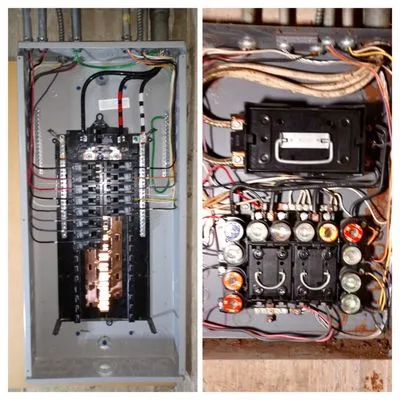
Your electrical system is 45 years old and was designed for a different era of appliances. Original 1981 NM-B Romex wiring in many Downtown West Chicago homes is often paired with an outdated 100A service panel. Modern loads from multiple air conditioners, computers, and entertainment systems simply exceed the original capacity, causing voltage drops seen as dimming lights. Upgrading to a 200A panel resolves this by providing the stable power foundation a contemporary home requires.
Our smart TVs and modems keep resetting after ComEd power flickers. What's going on?
ComEd's grid in our area faces moderate surge risk from seasonal thunderstorms. These micro-outages and voltage spikes are often too brief to trip a standard breaker but are severe enough to damage sensitive electronics. The built-in surge protection in most power strips is inadequate for these events. Installing a whole-house surge protector at your main service panel is the most effective defense, clamping damaging spikes before they ever enter your home's circuitry.
Do we need a permit from the city to replace our electrical panel, and what codes apply?
Absolutely. All panel replacements in West Chicago require a permit from the Building and Code Enforcement Division. As a Master Electrician licensed by the Illinois Department of Financial and Professional Regulation, I handle the entire permit process. The work must comply fully with the NEC 2023, which mandates AFCI protection for most living area circuits and specific grounding upgrades. This isn't red tape; it's a vital safety inspection that ensures the installation will protect your home and family for decades.
We lost power and smell something burning near the panel. How fast can an electrician get here?
For a burning smell or complete power loss, we treat it as a priority dispatch. From our base near Reed-Keppler Park, we can typically be on site in your neighborhood within 8 to 12 minutes via I-88. A burning odor often indicates a failing breaker, overheated wire connection, or a compromised bus bar, all of which are immediate fire risks. Our first action is to safely isolate the problem and prevent further damage to your home's wiring.
We have an old Federal Pacific panel and want to add an EV charger. Is our 100A service enough?
No, it is not. A Federal Pacific panel is a known safety hazard and should be replaced regardless of other plans. Even with a new panel, a 100A service from 1981 lacks the capacity for a Level 2 EV charger, which alone can demand 40-50A. Adding a modern heat pump would compound the issue. A full service upgrade to 200A is the necessary first step to safely support these high-demand appliances and eliminate the fire risk posed by the old panel.
How should we prepare our home's electrical system for a severe Illinois winter or summer brownout?
Winter preparedness starts with ensuring your heating system's electrical connections are tight and its dedicated circuit is protected by a properly rated AFCI/GFCI breaker. For summer brownouts, consider a hardwired backup generator with an automatic transfer switch, which keeps sump pumps and refrigerators running safely. In both seasons, a whole-house surge protector guards against grid fluctuations caused by ice storms or lightning, which are common on the prairie.
We live in the flat area near Reed-Keppler Park. Could the soil affect our home's electrical grounding?
Yes, the dense, clay-heavy soil common in our flat prairie plains can impact grounding effectiveness. This soil often retains moisture unevenly, which can lead to corrosive conditions for buried grounding electrodes like ground rods. Proper grounding is critical for safety and surge dissipation. During an inspection or panel upgrade, we test the grounding electrode system's resistance and may need to install additional rods or a concrete-encased electrode (Ufer ground) to meet NEC 2023 requirements for a low-resistance path to earth.
