Top Emergency Electricians in Libertyville, IL, 60030 | Compare & Call

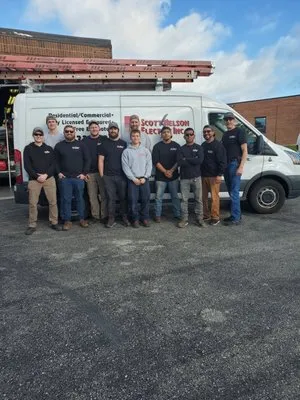
Scott Nelson Electric

Rein Electric
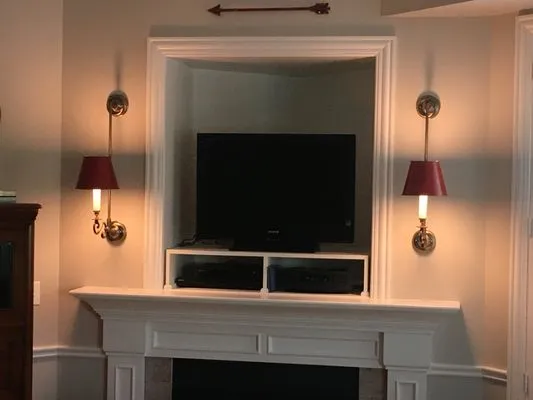
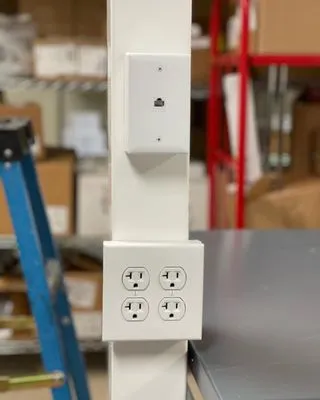
Libertyville Licensed Electrician
Optimum Construction
TopTec Heating, Cooling, Plumbing & Electrical
Frequently Asked Questions
My 1976 Butterfield-Mundy home has original wiring. Why do my lights dim when I run the microwave and air conditioner together?
Your home's electrical system is now 50 years old. The NM-B Romex cable from 1976 was sized for the appliance loads of that era, which were far lower than today's demands. Modern kitchens and high-efficiency HVAC systems draw significantly more current, causing voltage drops on the original branch circuits. This isn't just an inconvenience; it's a sign that your 100A service panel is likely overloaded and may not meet the current NEC standards for circuit capacity and safety.
I have an old Federal Pacific panel and want to install a Level 2 EV charger. Is my 100A service from 1976 enough?
No, it is not. A Federal Pacific panel is a known fire hazard due to breakers that fail to trip, and it must be replaced immediately regardless of your plans. Adding a Level 2 EV charger (requiring a 40-60A circuit) to an already-strained 100A service from 1976 would be unsafe and violate code. A full service upgrade to 200A is the necessary first step, which includes a new panel, modern AFCI breakers, and proper grounding to support the charger and other modern loads like a heat pump.
We have huge, old trees around Cook Park. Could that be causing flickering lights or interference in my home?
Absolutely. The heavy tree canopy in the Butterfield-Mundy area can cause line interference. Branches contacting overhead service drops or primary lines create intermittent faults that manifest as flickering lights. Furthermore, root systems can disrupt underground grounding electrode conductors, compromising your home's earth ground, which is essential for surge dissipation and safety. An inspection should check both the overhead service connection and the integrity of your grounding system.
I want to upgrade my electrical panel in Libertyville. What permits are needed, and does the work have to follow new code?
All panel upgrades in Libertyville require a permit from the Village of Libertyville Permit Division, followed by mandatory inspections. The work must be performed by a licensed electrician, as regulated by the Illinois Department of Financial and Professional Regulation, and must comply fully with the adopted NEC 2023 code. This ensures the installation of AFCI breakers, correct load calculations, and proper grounding—critical for safety and insurance. We handle the entire permit process to ensure compliance.
How should I prepare my Libertyville home's electrical system for a severe winter ice storm or a summer brownout?
For the extreme cold, ensure your heating system's electrical components are serviced and consider a hardwired generator with a proper transfer switch to maintain heat during an outage. In summer, brownouts from high AC demand can damage compressor motors. A whole-house surge protector is critical year-round. These preparations, compliant with NEC 2023, protect both your family and your major appliances from the region's climate stresses.
I smell burning plastic from my electrical panel. How fast can an electrician get to my house near Cook Park?
A burning smell indicates an immediate fire hazard—shut off the main breaker and call an emergency electrician. From our dispatch point near Cook Park, we can typically reach any Butterfield-Mundy home within 5-8 minutes using I-94 for quick access. Our priority is isolating the fault, which is often a failing breaker or overheated connection at the bus bars, to prevent an arc flash or electrical fire before restoring safe power.
My smart TVs and computers in Libertyville keep getting reset after ComEd power surges. What's happening?
Libertyville experiences moderate surge risk from seasonal thunderstorms on the ComEd grid. These voltage spikes travel through your home's wiring and can easily damage sensitive electronics. The problem is often compounded by older whole-house wiring that lacks modern surge protection. Installing a service entrance surge protective device at your meter, combined with point-of-use protectors, creates a layered defense to absorb these transients and protect your equipment.
My Libertyville home has overhead lines coming to a mast on the roof. What are the common issues with this setup?
Overhead service masts, common in neighborhoods built in the 1970s, are vulnerable to weather and tree damage. The mast itself must be securely anchored; winter ice and wind can strain the connections. The service drop wires from the ComEd pole can degrade over 50 years, and the entrance cable where it enters your meter may have deteriorated insulation. We inspect the mast's structural integrity, the weatherhead, and the service entrance conductors for any damage that could lead to an outage or fire.
