Top Emergency Electricians in Blackfoot, ID, 83221 | Compare & Call


Blane Robbins Electric
Mickelsen Electric
Right Now Heating, Air Conditioning & Plumbing

Frequently Asked Questions
My lights flicker sometimes, and my new smart TV rebooted during a storm. Is this an Idaho Power issue or something in my house?
Flickering can stem from either source. Idaho Power manages a robust grid, but the high desert plains see moderate seasonal lightning and grid fluctuations that can cause minor surges. These surges are increasingly harmful to sensitive smart home electronics. An issue inside your home, like a loose connection at the service entrance or a failing breaker, can also cause flickering. A master electrician can install whole-house surge protection at your main panel to guard against external spikes and perform a diagnostic to locate and repair any internal faults.
I want to upgrade my electrical panel. What permits do I need from Bingham County, and does the work have to follow the 2023 NEC?
Any service panel upgrade or replacement in Blackfoot requires an electrical permit from the Bingham County Building Department. As a master electrician licensed through the Idaho Division of Occupational and Professional Licenses, I pull these permits on your behalf. All work must fully comply with the 2023 National Electrical Code (NEC), which is the state-adopted standard. This ensures safety, proper capacity for future loads, and that the installation passes the required county inspections, protecting your home's value and insurability.
The lights went out and I smell something burning from an outlet. How fast can an electrician get to my house near Jensen Grove Park?
For a burning smell or total power loss, we treat it as a priority dispatch. From our shop near Jensen Grove Park, we can typically be en route in under 10 minutes, using I-15 for quick access across Blackfoot. Your first step is to go to your main panel and shut off the breaker for the affected circuit if it's safe to do so. Do not use that outlet. We'll diagnose the fault, which is often a loose connection or failing device, and make the repair to code to prevent a potential fire.
We live in the high desert plains near Jensen Grove. Does the dry, rocky soil affect my home's electrical grounding?
Yes, the high desert terrain presents a unique grounding challenge. Rocky, resistive soil can make it difficult to achieve a low-resistance connection to earth, which is critical for your grounding electrode system to safely dissipate fault currents and stabilize voltage. During an inspection, we test ground rod resistance. If it's too high, we may need to install additional rods or use a chemical ground enhancement material to ensure your home's safety system functions as intended, especially during a lightning strike or utility fault.
How should I prepare my home's electrical system for a Blackfoot winter where it can hit -10°F?
Winter preparedness focuses on reliability during heating surges and ice storms. Ensure your furnace and any backup heating elements are on dedicated, properly sized circuits. Consider installing a generator interlock kit and an inlet box for a portable generator to maintain essential heat and refrigeration during an extended outage. Whole-house surge protection is also wise, as power restoration after storms can cause damaging spikes. Scheduling a pre-winter electrical inspection can identify weak points before the peak demand season stresses your system.
I heard some old electrical panels are fire hazards. I have a Federal Pacific panel and want to add an EV charger. What do I need to know?
Federal Pacific Electric (FPE) panels have a known failure rate where breakers may not trip during an overload, creating a significant fire risk. We recommend replacing any FPE panel immediately, regardless of other plans. Adding a Level 2 EV charger to a 1970s-era 100-amp service is not feasible; it requires a dedicated 40-60 amp circuit. The only safe path forward is a full service upgrade, which includes replacing the hazardous panel with a modern, code-compliant model with adequate capacity for both your home and future EV charging.
My lights dim when the microwave runs, and I can't run the air fryer and toaster oven together. Is my old Blackfoot house just not cut out for modern appliances?
Downtown Blackfoot homes built around 1970, like many in your neighborhood, have a 56-year-old electrical system originally sized for far fewer devices. The NM-B (Romex) wiring itself is likely safe if undisturbed, but the core issue is your 100-amp service panel's capacity. Modern kitchens and home offices draw much more power than systems from that era were designed to handle. This constant demand on an aging panel can lead to overloaded circuits and nuisance breaker trips, signaling it's time for a professional load calculation and likely a service upgrade.
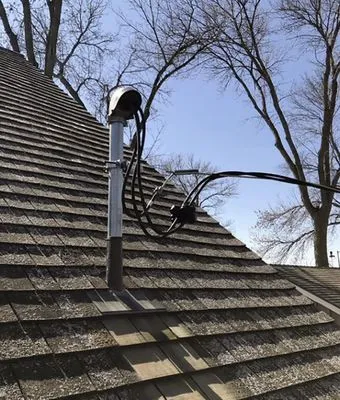
My power comes in on an overhead line to a mast on my roof. What are the common issues with this setup I should watch for?
Overhead service drops and masts are standard here, but they are exposed to the elements. Common issues include masthead corrosion, weatherhead damage, and tree limb interference with the service lines. In winter, heavy ice accumulation can strain the mast and lines. You should periodically inspect where the utility lines attach to your house for any visible damage, sagging, or wear. Any work on the mast, weatherhead, or service entrance cables must be performed by a licensed electrician, as it involves the live utility connection before your meter.
