Top Emergency Electricians in Atlanta, GA, 30301 | Compare & Call

M D Contracting Solutions

Tate Electric
Handy Electrician
Frequently Asked Questions
We have huge old trees near Piedmont Park. Could they be affecting our home's electricity?
Absolutely. A heavy tree canopy causes two main issues. First, limbs rubbing on overhead service drops can damage the insulation, leading to shorts and intermittent power. Second, extensive root systems can disrupt your home's grounding electrode system, especially if you have a buried ground rod. Poor grounding prevents proper surge dissipation and can cause erratic breaker behavior. An inspection should check both the overhead drop and ground resistance.
With Atlanta's summer brownouts and winter ice storms, how can I keep my family safe and powered?
Prepare for both scenarios. For summer peaks, ensure your AC system is on a dedicated, properly sized circuit to prevent overloads. For winter storms, a permanently installed generator with an automatic transfer switch is the safest solution. Never use a portable generator indoors or connect it directly to your home's wiring without a proper interlock kit, as this can backfeed and kill utility workers.
Our Midtown home was built in 1986 and the lights dim when the AC kicks on. Is the old wiring just not up to modern life?
Your home's original NM-B Romex wiring is now 40 years old. While the copper itself can last, the system wasn't designed for today's concurrent high-draw loads. A 150A panel from 1986 often struggles with central air, multiple large-screen TVs, and kitchen appliances all running at once. This constant overloading on circuits heats up connections over time, which is a primary fire risk in older Atlanta homes.
I smell something burning from an outlet in my Midtown condo and lost power to half my kitchen. How fast can an electrician get here?
For a burning smell with partial power loss, treat it as an emergency. We dispatch immediately from our base near Piedmont Park. Using I-75/I-85, we can typically be on-site in your Midtown building within 8 to 12 minutes. First, shut off the breaker for that circuit at your main panel to isolate the hazard until we arrive.
My Midtown home has an overhead mast coming from the pole. What should I know about this setup?
Overhead service masts are common here. The mast itself must be structurally sound; Atlanta's heavy rains and occasional ice can weigh down the lines, potentially bending a weak mast. The point where the utility's service drop connects to your mast head is your responsibility to maintain. We also ensure the mast is properly grounded to your home's electrode system, which is critical for lightning protection given our local surge risk.
My smart home devices keep resetting after Georgia Power flickers or a lightning storm. What's going on?
Atlanta's high lightning activity creates voltage surges and 'dirty power' on the grid that Georgia Power's infrastructure can't always filter. These micro-surges are brutal on sensitive electronics like smart thermostats and routers. The issue often originates at the service entrance. Installing a whole-house surge protector at your main panel, combined with point-of-use protectors, creates a layered defense to absorb these spikes.
I heard Atlanta is strict on permits for electrical work. What's involved in getting a panel upgrade approved?
All major work requires a permit from the City of Atlanta Office of Buildings and must comply with the 2023 NEC. As a Master Electrician licensed by the Georgia State Board, I handle the entire process: filing the detailed application, scheduling the rough-in and final inspections, and ensuring the installation passes. This documentation is crucial for your safety and is a legal requirement that protects your home's value and insurability.
I think I have a Federal Pacific panel in my 1986 home and want to add an EV charger. Is this a dangerous combination?
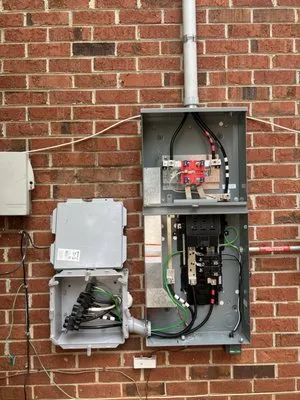
Yes, it is. Federal Pacific panels are known for failing to trip during overloads, creating a severe fire hazard. Adding a Level 2 EV charger's sustained 30-50 amp load to such a panel is exceptionally risky. Furthermore, your existing 150A service may be insufficient for the charger plus a modern heat pump. Upgrading to a new, code-compliant 200A panel is the necessary first step for both safety and capacity.
