Top Emergency Electricians in Fort Pierce, FL, 34945 | Compare & Call


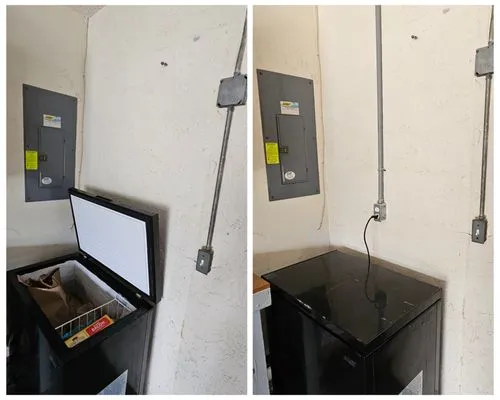
St Lucie Handyman Services
Jays Electrical Service
Question Answers
What's involved in upgrading from overhead to underground service in Downtown Fort Pierce?
Most Downtown Fort Pierce homes have overhead service via a mast, which is standard for 1980s construction. Converting to underground requires coordination with Fort Pierce Utilities Authority for new conduit runs from the pole to your meter. The City of Fort Pierce Building Department permits the trenching and connection work. While underground service offers aesthetic and storm resilience benefits, it's a significant project involving excavation, new meter bases, and possible panel relocation to meet current NEC 2023 clearance requirements.
My power went out and I smell something burning—how fast can an electrician get here?
From Marina Square, we can typically reach Downtown Fort Pierce addresses within 5-8 minutes via US-1. Burning smells indicate immediate electrical hazards like overheating wires or failing breakers that require urgent attention. We dispatch with priority for fire prevention, and our trucks carry diagnostic tools to assess the situation on arrival. Don't wait with these symptoms—cut power at the main breaker if safe and call immediately.
What permits and inspections are needed for a panel replacement in Fort Pierce?
The City of Fort Pierce Building Department requires permits for all panel replacements, with inspections at rough-in and final stages. We handle this paperwork as Florida-licensed contractors through the Department of Business and Professional Regulation. NEC 2023 compliance mandates AFCI protection for most circuits, proper labeling, and updated grounding. Unpermitted work voids insurance coverage and creates safety risks—we ensure all installations meet current codes and pass inspection before energizing.
Why do my smart home devices keep resetting during thunderstorms in Fort Pierce?
Fort Pierce Utilities Authority serves an area with high lightning strike frequency, creating surge risks that overwhelm basic protection. Modern electronics with sensitive microprocessors—smart thermostats, computers, entertainment systems—are particularly vulnerable. Whole-house surge protection at your main panel, combined with point-of-use protectors, creates layered defense. Without this, repeated surges degrade equipment over time, leading to premature failures.
How should I prepare my electrical system for Florida's summer brownouts and occasional winter cold snaps?
Summer AC peaks strain the grid, while winter lows around 45°F can bring unexpected ice storms. For brownouts, consider a whole-house surge protector to guard against voltage fluctuations. For extended outages, a properly installed generator with transfer switch provides backup power. Ensure your panel has capacity for these additions—many 1980s homes need service upgrades first. Regular maintenance checks before peak seasons help identify weak points.
Why do my lights dim when I run the microwave and air conditioner together in my Downtown Fort Pierce home?
Your home's electrical system is about 46 years old, dating back to 1980 when it was built. Original NM-B Romex wiring in Downtown Fort Pierce homes was designed for fewer and less power-hungry appliances than we use today. Modern 2026 appliance loads—like high-efficiency air conditioners, multiple refrigerators, and entertainment systems—can strain that 100A panel capacity. This creates voltage drops that manifest as dimming lights or slow appliance startups.
Does living on the flat coastal plain near Marina Square affect my home's electrical grounding?
The flat coastal terrain presents both advantages and challenges. Sandy soil common in this area has higher resistance than clay, potentially affecting grounding electrode performance. We test ground resistance during inspections and may recommend additional grounding rods or chemical treatments. However, the flat landscape reduces lightning strike risks compared to elevated areas. Proper grounding is especially important given Fort Pierce's high surge environment and salt air corrosion factors.
Can my 1980s house with a Federal Pacific panel handle installing a Level 2 EV charger or heat pump?
No, not safely. Federal Pacific panels have known failure risks and should be replaced regardless of other upgrades. Even with a new panel, your 100A service is insufficient for adding a Level 2 EV charger (typically requiring 40-50A) or modern heat pump systems. Most Fort Pierce homes from this era need a service upgrade to 200A to support these high-demand appliances while maintaining safe operating margins for existing circuits.
