Top Emergency Electricians in Tolland, CT, 06084 | Compare & Call

AJP Electric


Questions and Answers
How should I prepare my home's electrical system for Connecticut ice storms and summer brownouts?
Preparation involves both protection and backup. A professionally installed generator with a proper transfer switch is the most reliable solution for extended outages. For the frequent, short-duration surges and sags that accompany storms, a whole-house surge protector is essential. Also, ensure your main service mast and overhead connections are clear of ice dam buildup and tree limbs. During peak summer AC use, avoid running multiple high-draw appliances simultaneously to prevent overloading your 100-amp service.
Our lights dim when the air conditioner kicks on. Is the wiring in our Tolland Green home too old for 2026?
A 42-year-old electrical system, using original NM-B Romex from 1984, was not designed for today's constant, high-draw loads. Modern kitchens with multiple appliances, home offices, and entertainment centers can easily overload circuits, causing voltage drops you notice as dimming lights. This is a common capacity issue in our neighborhood, signaling it's time for a professional load calculation and likely a panel upgrade to safely meet current demand.
What permits and codes are involved in upgrading our electrical panel in Tolland?
All panel replacements or service upgrades in Tolland require a permit from the Tolland Building Department and a final inspection. As a Connecticut licensed electrician, we pull these permits on your behalf. The work must fully comply with the NEC 2020, which is the state-adopted code enforced by the town. This ensures safety standards for AFCI/GFCI protection, proper wire sizing, and grounding. We handle all paperwork and coordination with the inspector, guaranteeing the job meets the strict standards of the Connecticut Department of Consumer Protection.
We have overhead wires coming to our house. What are the common maintenance issues we should watch for?
Overhead service, or a mast, is standard here and requires periodic visual inspection. Look for the service drop cable sagging too close to trees or roofs, which is a hazard. Check the masthead (where the wires enter the conduit) for corrosion or animal damage. The mast itself must remain plumb; ice or wind can loosen its attachment. Any damage here is the homeowner's responsibility from the connection point down to the meter. Keeping trees trimmed well back from the lines is the most effective preventative maintenance.
We lost all power and smell something burning. How fast can an electrician get to our house near Crandall Park?
For a no-power, burning smell emergency, we treat it as a top-priority dispatch. From our staging near Crandall Park, we can typically be en route within minutes, using I-84 for the fastest access to most Tolland Green addresses. Our expected travel time is 8-12 minutes. Upon arrival, we first secure the main service disconnect to prevent fire risk before diagnosing the issue at the panel or wiring.
We have a 100-amp Federal Pacific panel. Can we add a heat pump or EV charger safely?
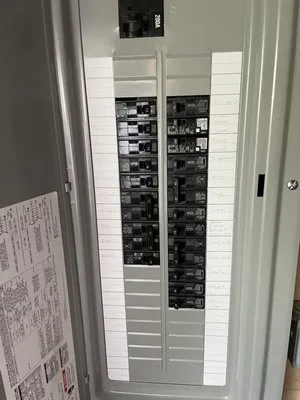
A Federal Pacific panel is a known safety hazard due to its tendency to fail to trip during an overload, creating a serious fire risk. It must be replaced before adding any major load. Even with a new panel, a 100-amp service from 1984 is typically insufficient for a Level 2 EV charger or a whole-house heat pump. A full service upgrade to 200 amps is almost always required to handle these modern, high-capacity appliances safely and to code.
Could the heavy tree canopy around our property near the park be affecting our home's power quality?
Absolutely. The dense tree canopy common around Crandall Park is a primary cause of local power quality issues. Branches rubbing against or falling on the overhead service lines feeding your home can cause arcing, noise, and intermittent connections, which manifest as flickering lights or electronic glitches. Furthermore, rocky soil and tree root systems in this terrain can compromise your home's grounding electrode system, which is vital for safely dissipating lightning strikes and utility surges.
Why do our lights flicker and smart devices reboot during storms? Is this an Eversource grid problem?
Flickering during Tolland's seasonal ice storms often points to grid disturbances from Eversource. Tree contact, downed lines, or utility equipment switching can cause momentary sags and surges. These events are particularly hard on modern smart home electronics and computers. Installing a whole-house surge protector at your main panel is a critical defense, clamping these transient voltages before they can damage sensitive circuitry inside your home.
