Top Emergency Electricians in Berkeley, CA, 94701 | Compare & Call


Advanced Electrical & Telecom
FAQs
What permits and codes apply if we upgrade our electrical panel in Berkeley?
All electrical work in Berkeley requires a permit from the City's Building and Safety Division and must comply with the 2023 California Electrical Code (based on NEC 2023). As a C-10 licensed contractor through the CSLB, we handle the entire permit process, including the required inspections. This ensures your upgrade is documented, increases your home's safety and value, and meets all current standards for arc-fault and ground-fault protection.
Our inspection found a Federal Pacific Electric panel. Is it safe to add an EV charger or a heat pump to this old system?
No, it is not safe. A Federal Pacific Electric (FPE) panel is a known fire hazard due to breakers that can fail to trip during an overload. Furthermore, its 60-amp capacity is grossly inadequate for a Level 2 EV charger or a modern heat pump, which each require dedicated 40-50 amp circuits. Installing these on an FPE panel with old wiring would be a severe code violation and a significant safety risk, requiring a full service upgrade first.
We have a lot of tall trees near our home in the hills. Could that be causing our flickering lights?
Yes, the dense urban canopy and hilly terrain common in North Berkeley can contribute to power quality issues. Overhead service lines rubbing against tree branches cause interference, while rocky, hilly soil can challenge the effectiveness of your home's grounding electrode system. Both conditions can lead to voltage fluctuations visible as flickering lights, and they warrant an inspection of both the utility service drop and your property's grounding.
We just lost all power and smell something burning. How quickly can an electrician get here from the UC Berkeley area?
For a burning smell with a total power loss, we treat it as a critical dispatch. From a starting point near the UC Berkeley campus, we can typically navigate via I-80 to reach most North Berkeley addresses within 10 to 15 minutes. Your first action should be to safely shut off the main breaker at your service panel if you can do so without risk, and call both your electrician and PG&E immediately.
Our smart home devices in Berkeley keep resetting. Is this a PG&E grid issue or a problem with our house?
While PG&E manages the grid, the low lightning surge risk in our area means minor voltage fluctuations are more common than major spikes. However, sensitive electronics like smart home hubs are often the first to react to poor wiring connections or an overloaded circuit in an older home. A dedicated whole-house surge protector installed at your main panel, combined with a circuit evaluation, is the best defense against these nuisance resets and potential damage.
Our power lines come in overhead on a mast. Is that less reliable than the underground lines in newer parts of town?
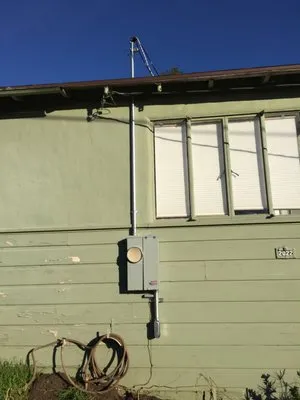
Overhead mast service is standard for homes of your era and is generally reliable, but it has different vulnerabilities. The mast and weatherhead are exposed to wind, falling branches, and seismic activity, which underground service avoids. For overhead service, ensuring the mast is securely anchored and the cable from the pole is in good condition is critical. In either case, the capacity and safety of the wiring inside your walls are the primary concerns for a 1945 home.
How should we prepare our Berkeley home's electrical system for summer brownouts or winter ice storms?
For summer peaks, ensure your cooling loads are on dedicated circuits and consider an energy audit to balance demand. A professionally installed generator with a proper transfer switch is the most reliable backup for extended outages from winter storms. Given the age of many systems here, having an electrician verify your panel and service mast can withstand ice load and wind is a prudent preparatory step.
I live in a 1945 North Berkeley home. Why are the lights dimming when we run our appliances?
Your electrical system is 81 years old and likely uses original knob and tube wiring. That system was designed for a few lights and an icebox, not for the 2026 standard of multiple high-draw devices like computers, air conditioners, and induction ranges. The insulation on this old wiring degrades over time, and the circuits lack a modern grounding conductor, which creates both a fire risk and a capacity problem for today's electrical loads.
