Top Emergency Electricians in American Canyon, CA, 94503 | Compare & Call


Peter Ellis Construction
Common Questions
We live on the flat valley floor near the community park. Does this type of terrain affect our home's electrical grounding?
The flat, often clay-heavy soil in American Canyon can impact grounding electrode resistance. Proper grounding is critical for safety and surge dissipation. While the terrain doesn't typically cause line interference like a heavily forested area might, we often need to drive grounding rods deeper or use multiple rods to achieve the low-resistance ground required by the NEC. This ensures your surge protectors and safety systems function correctly.
We've lost all power and smell something burning near the panel. How fast can an electrician get here?
For an emergency like a burning smell, which indicates an active electrical fault, we prioritize immediate dispatch. From our starting point near American Canyon Community Park, we can typically reach homes in Rancho Del Mar via CA-29 within 5 to 8 minutes. The first action upon safe arrival is to secure the main service disconnect to halt the hazard, then begin diagnosing the fault at the panel or in the affected circuit.
What permits and code rules are involved in replacing an old electrical panel in American Canyon?
Any panel replacement requires a permit from the American Canyon Building Division and must be performed by a contractor holding a valid C-10 license from the CSLB. The installation must fully comply with the 2023 California Electrical Code (based on NEC 2023), which includes requirements for AFCI breakers, specific working space around the panel, and updated grounding. As the expert on site, we handle the permit application, scheduling inspections, and ensuring all work passes the final inspection for your safety and compliance.
We have a Federal Pacific panel and want to install a Level 2 EV charger. Is our current setup safe or do we need an upgrade?
A Federal Pacific panel presents a significant safety concern, as these are known for faulty breakers that may not trip during an overload or short circuit. Adding a 40 to 50-amp circuit for a Level 2 charger to this panel is not advisable. Furthermore, your existing 125-amp service may be insufficient for the combined load of the charger, air conditioning, and other household loads. A full panel replacement and likely a service upgrade to 200 amps would be the safe, code-compliant path to support both an EV charger and modern appliances.
Our home was built in 1995 and the lights dim when the microwave runs. Is our wiring outdated for today's appliances?
Your electrical system is now 31 years old. Homes from that era in Rancho Del Mar were typically wired with NM-B Romex for standard 15 and 20-amp circuits. That wiring itself is often still serviceable, but the challenge is capacity. A 1995 electrical panel was not designed for the constant, high-draw loads of 2026, like multiple computers, large-screen TVs, and high-power kitchen gadgets all operating simultaneously. This cumulative demand on a 125-amp service can cause voltage drops, which manifest as dimming lights.
Our lights flicker occasionally, and our smart devices sometimes reset. Is this a problem with PG&E or our home wiring?
Flickering lights often point to a loose connection, either at an outlet, within the panel, or at the utility's service point. While PG&E's grid in our area has moderate instability, which can cause minor surges, your smart devices are particularly sensitive. We first diagnose the home's internal wiring and grounding. Installing whole-house surge protection at the main panel is a recommended defense to smooth out these minor grid fluctuations and protect sensitive electronics.
Our power lines come into the house underground. What should we know about maintaining this type of service?
Underground service laterals, common in Rancho Del Mar, are generally more reliable than overhead lines in terms of storm exposure. The primary concern is the integrity of the conduit where it enters the home and at the meter base. We check for proper sealing to prevent moisture intrusion, which can corrode connections. The utility-owned cable from the transformer to your meter is PG&E's responsibility, while everything from the meter onward, including the meter enclosure itself, is the homeowner's responsibility to maintain.
How can we prepare our home's electrical system for summer brownouts and the occasional winter freeze?
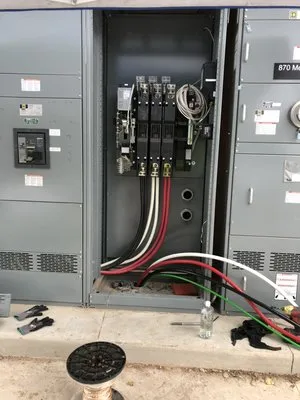
For summer peaks, ensure your air conditioner is on a dedicated, properly sized circuit and consider having its electrical components serviced. A licensed electrician can also perform a load calculation to see if your 125-amp panel is operating near its limit. For winter, insulating exposed pipes with heat tape requires a GFCI-protected circuit. For extended outages during either season, a permanently installed standby generator with an automatic transfer switch is the most reliable solution, but it requires a significant panel upgrade and permitting.
