Top Emergency Electricians in Glendale, AZ, 85301 | Compare & Call

Arrowhead Electric
One Way Electric
Common Questions
How can I prepare my Glendale home's electrical system for both summer brownouts and the occasional winter freeze?
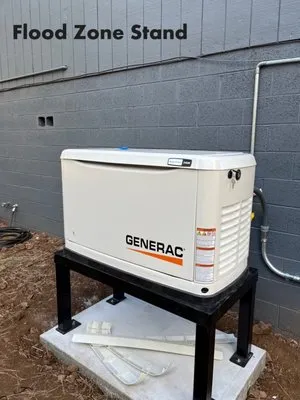
For summer brownouts, ensure your HVAC system is on a dedicated, properly sized circuit and consider a hardwired surge protector. For winter, a portable generator with a manual transfer switch can provide critical backup heat. Never use a generator indoors or backfeed your panel through a dryer outlet, as this is extremely dangerous and illegal. A licensed electrician can install a compliant transfer switch that isolates your home from the grid during an outage.
My Downtown Glendale house was built in 1985 and the lights dim when the AC kicks on. Why is my original wiring struggling now?
Your home's electrical system is over 40 years old. The original NM-B Romex cable and 100-amp service were designed for the appliance loads of the 1980s, not the demands of today's high-efficiency HVAC, multiple computers, and large-screen TVs. Modern homes often require 200-amp service to handle concurrent loads without voltage drops, which manifest as dimming lights. An assessment can determine if your panel and branch circuits need upgrading.
My smart TVs and computers keep resetting during summer storms. Is this an APS grid problem or something in my house?
Frequent surges and flickering are common with the Arizona Public Service grid, especially given our high lightning risk. While APS manages the external supply, the protection of your sensitive electronics is your responsibility. A whole-house surge protector installed at your main panel is the most effective defense, clamping dangerous voltage spikes before they reach your devices. Point-of-use surge strips offer a secondary layer but cannot handle a direct lightning-induced surge.
I found a Federal Pacific panel in my 1985 home. Can I safely add a Level 2 EV charger or a new heat pump?
Installing major new loads on a Federal Pacific panel is not advisable. These panels have a known failure rate and are not listed for new installations. Your existing 100-amp service is also likely insufficient for a Level 2 charger, which alone can demand 40-50 amps. A full service upgrade to 200 amps and replacement of the hazardous panel is the necessary first step to safely support modern electric vehicles and high-demand heat pumps.
I just lost all power and smell something burning from my panel. How fast can an electrician get to my home near Murphy Park?
For a burning smell or total power loss, treat it as an emergency and call immediately. From a central dispatch point like Murphy Park, a local master electrician can typically reach most Downtown Glendale homes within 8 to 12 minutes using the I-17 corridor. Our priority is to secure your home, diagnose the immediate fault—often a failed breaker or overheated connection—and restore safety before addressing any underlying causes.
I want to upgrade my panel. What do I need to know about Glendale permits and Arizona electrical codes?
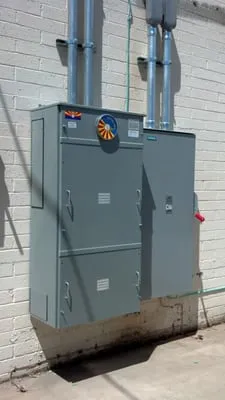
All panel upgrades require a permit from the Glendale Planning and Development Department and must be performed by a contractor licensed by the Arizona Registrar of Contractors. The work will be inspected to ensure compliance with the 2023 National Electrical Code, which includes updated requirements for AFCI protection and service equipment. As the master electrician, I handle the permit application, scheduling, and ensure the installation passes inspection, so you don't have to navigate the red tape.
My power comes in on an overhead mast. What are the common issues with this setup in a suburban area like mine?
Overhead service masts are standard but expose your home's entry point to environmental wear. Common issues include masthead corrosion, weatherhead damage from monsoon winds, and tension on the service drop conductors from tree growth or thermal expansion. We inspect the mast's structural integrity, the condition of the SE cable, and the meter enclosure for water intrusion. Any sagging or damage here is a point of failure before power even reaches your main panel.
We have flat, rocky soil here near Murphy Park. Could that be affecting my home's electrical grounding?
Yes, the dry, rocky desert soil presents a challenge for grounding electrode systems, which require good earth contact to safely dissipate fault currents. Over decades, corrosion and soil resistivity can degrade the connection. We test ground resistance to ensure your grounding electrodes—typically metal rods driven into the earth—are still effective. Proper grounding is non-negotiable for safety, as it prevents shock hazards and allows overcurrent devices to trip correctly.
