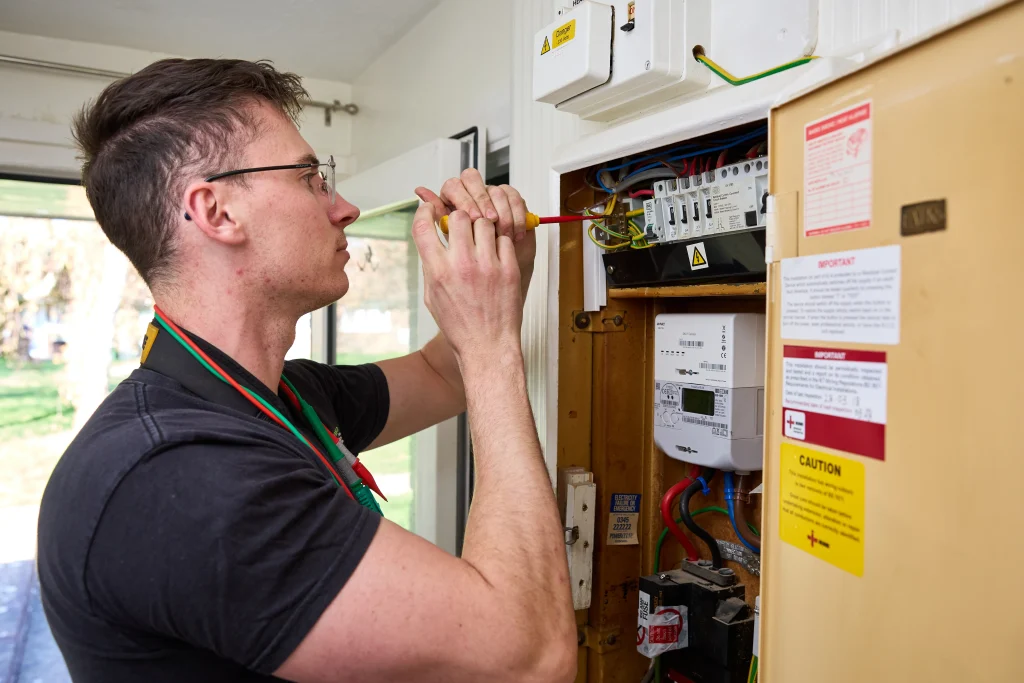
Emergency Electricians Near Me: 24/7 Fast & Safe Repairs
Imagine standing in your hallway at 2:00 AM while water from a burst pipe pours through your ceiling. As the pool grows, it nears a power strip or seeps into a wall outlet. This is more than a plumbing mishap; it is a life-threatening electrical hazard. When water meets your home’s wiring, you need professional help immediately. Searching for emergency electricians near me is the first step toward securing your property and protecting your family from fire or shock.
This guide provides a clear roadmap for handling electrical crises. We will cover how to identify urgent threats, such as burning smells or buzzing breaker boxes. You will learn the exact steps to take while waiting for help to arrive. We also break down what you should expect to pay for rapid service and how to verify that a contractor is truly qualified. Whether you are a homeowner dealing with a leaking water heater or a small business owner facing a total power failure, this article gives you the facts. Read on to learn how to find fast, reliable, and professional electrical support when every second counts.
I. Immediate Actions: What to Do in an Electrical Emergency
When a pipe bursts or a toilet overflows, your first instinct is to grab a mop. Stop. If water is anywhere near your outlets, baseboards, or appliances, your home is now a conductor for electricity. You must treat this as a life-threatening situation before you address the water damage.
1. Safety First: The 3-Step Crisis Protocol
The moment you see water encroaching on electrical zones, follow this protocol:
- Don’t Touch: Never touch a damp wall or stand in a puddle to reach a switch.
- Observe from Distance: Look for signs of arcing, such as blue sparks or a crackling sound. This means electricity is jumping through the air or water.
- Call for Help: If you cannot safely reach your breaker, call emergency electricians near me immediately from outside the house.
2. How to Safely Shut Off Your Main Power Breaker
If your breaker box is in a dry, high location away from the leak, you should shut off the main power. This kills electricity to the entire house. Open the panel and look for the largest switch at the top. Flip it to the “Off” position.
Expert Insight: Many homeowners make the mistake of only turning off the specific “room” breaker. However, water can travel inside wall cavities along wire jackets, potentially energizing circuits in rooms that look dry. In a flood, “all or nothing” is the safest rule for power.
3. Warning: When to Evacuate Your Property Immediately
If you hear a loud buzzing coming from the walls or see smoke rising from wet carpet, leave the building. Water can cause circuit breaker tripping to fail if the panel itself is compromised. Recent data from the National Fire Protection Association (NFPA) shows that local fire departments respond to a home structure fire every 96 seconds in the U.S., with electrical malfunctions being a top cause. Your life is worth more than a rug.
II. Identifying Your Emergency: When to Call a Pro
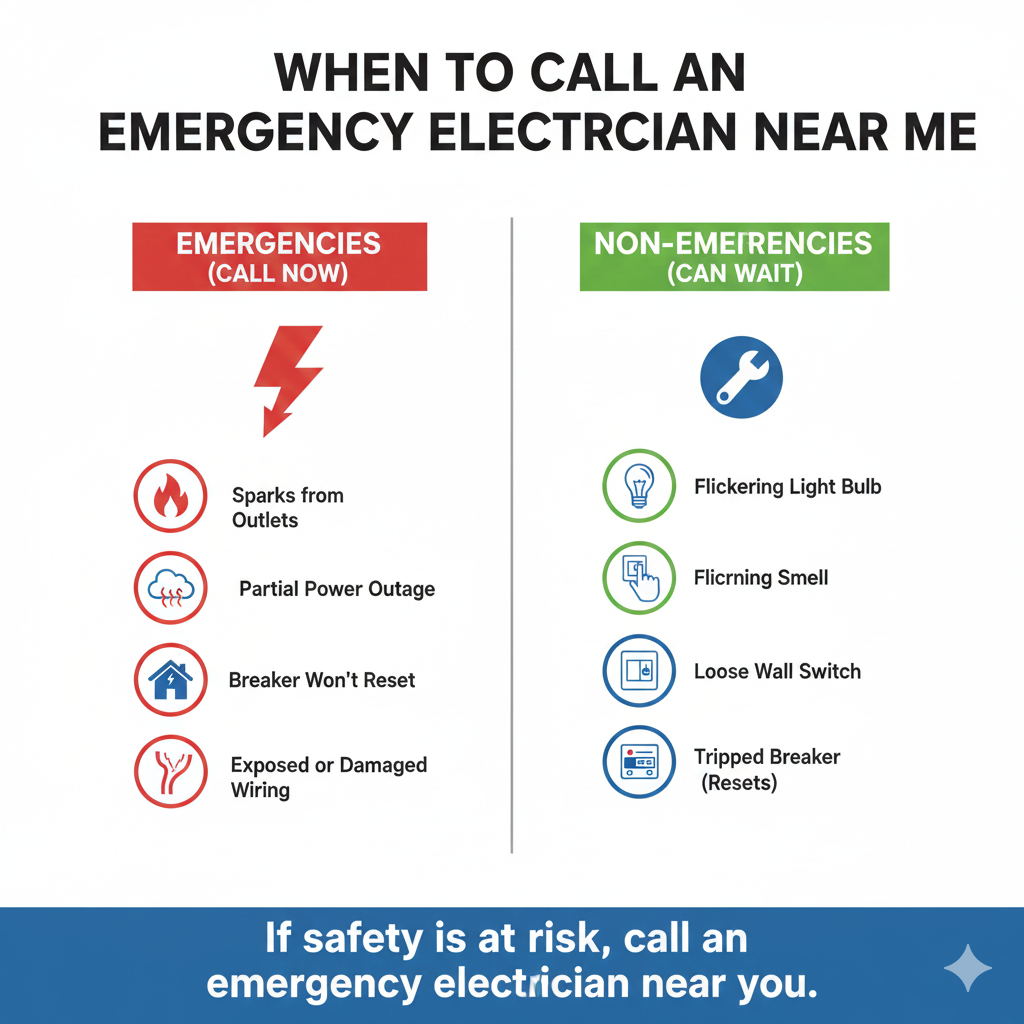
Not every flickering light is an emergency, but when water enters the equation, the risk profile changes. You need to know when a “tomorrow” problem becomes a “right now” disaster.
1. The Danger of Water and Electricity
Water and electricity are a lethal pair. Pure water is a poor conductor, but the water in your home—whether from a burst pipe or a sewage backup—contains minerals and contaminants that allow current to flow easily.
- Burst Pipes: A pipe burst inside a wall can soak hidden junction boxes. You might not see the water, but you will smell the burning smell from an outlet as the insulation melts.
- Overflowing Toilets: This water is highly conductive. If it seeps through a floor into a ceiling light fixture below, that fixture becomes a live hazard.
2. Critical Electrical Failure Signs
Watch for these non-negotiable emergency signals:
- Hot to the Touch: If a wall or outlet feels warm, the wires inside are likely shorting out.
- Buzzing or Humming: This is the sound of electricity struggling to stay on its path.
- Discolored Outlets: Any brown or black charring indicates that a fire has already started or is imminent.
A recent case study involves a small business owner whose water heater leaked into an adjacent server room. The owner assumed drying the floor was enough. Three days later, a fire broke out inside the wall because moisture had stayed trapped in the conduit. This highlights the need for a licensed electrician for water damage to perform specialized testing on wire insulation hidden from view.
III. Specialized Emergency Services for Homeowners
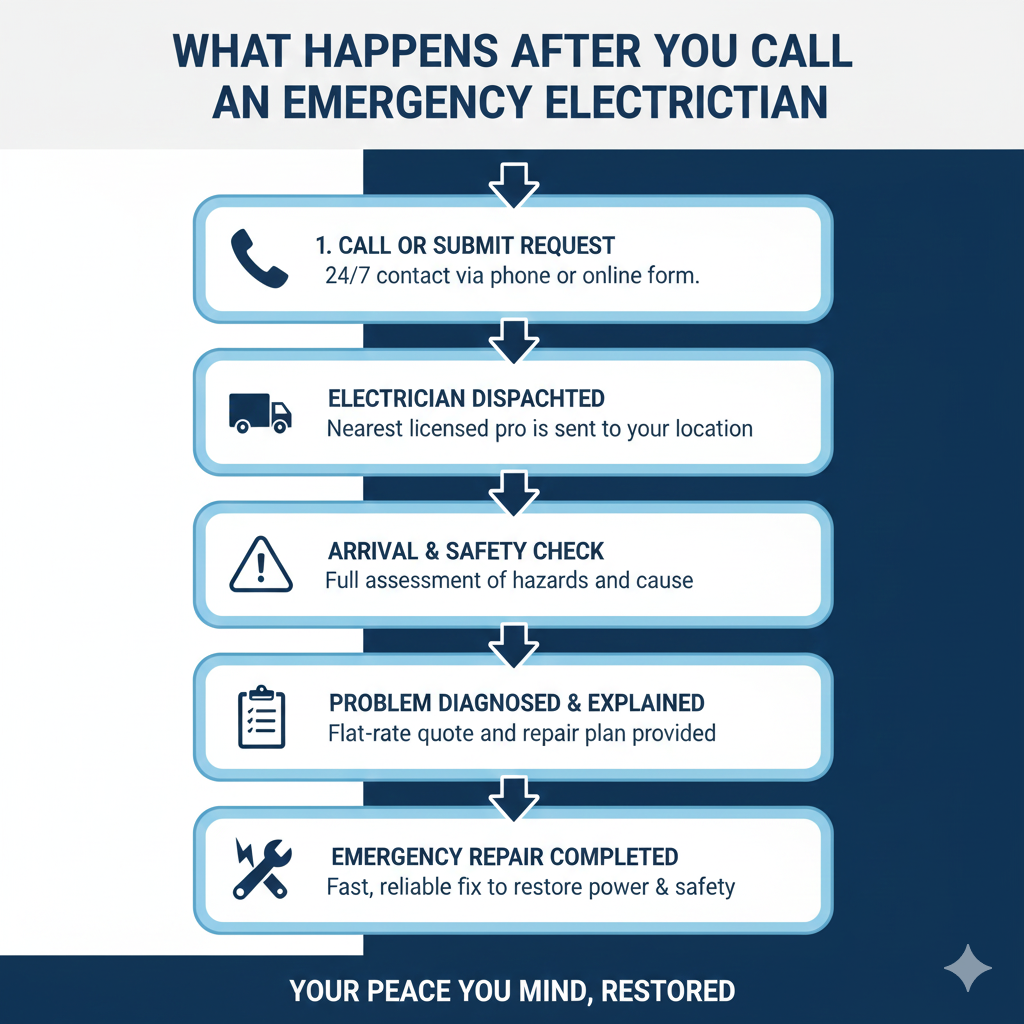
When you call for help, you aren’t just paying for a repair; you are paying for professional troubleshooting and diagnostics.
1. Rapid Response and Main Panel Repairs
An emergency electrician’s first job is to make the site safe. This often involves isolating damaged circuits so you can restore power to “safe” areas of the house while leaving the “wet” areas dead. If water entered your main service panel, the internal bus bars may have corroded. A pro will clean, dry, and often replace these components to prevent future house fires.
2. Emergency Repairs for Broken Hot Water Systems
A broken hot water system is a unique double-threat. If an electric water heater’s tank fails, it dumps water directly onto its own high-voltage heating elements.
- The Fix: The electrician will disconnect the unit and cap the wires safely. This allows a plumber to replace the tank without the risk of being shocked while handling the pipes.
Unique Perspective: Most people think of electricians as “installers.” In an emergency, think of them as “detectives.” A professional uses infrared cameras to find moisture “hot spots” behind your drywall that you can’t see with the naked eye. This prevents “hidden” fires that could start weeks after the plumber leaves.
IV. Understanding Emergency Costs and Value
Speed comes at a price, but the cost of waiting is always higher.
1. Factors That Influence Emergency Rates
Most emergency electricians near me charge a dispatch fee ranging from $100 to $250 just to show up after hours. Hourly rates for emergency labor typically run $150–$300 per hour.
| Service Type | Typical Cost (Standard) | Emergency Rate (Estimated) |
|---|---|---|
| Outlet Replacement | $150 – $200 | $350 – $500 |
| Circuit Breaker Fix | $200 – $300 | $450 – $650 |
| Panel Inspection | $150 – $250 | $400 – $600 |
2. The Value of Prevention
Think of the cost of emergency electrical call out near me as an insurance policy. The average cost of an electrical fire is nearly $27,000 in damages. Spending $500 to have a professional isolate a dangerous circuit is a massive net gain.
V. Choosing the Right Electrician Near You
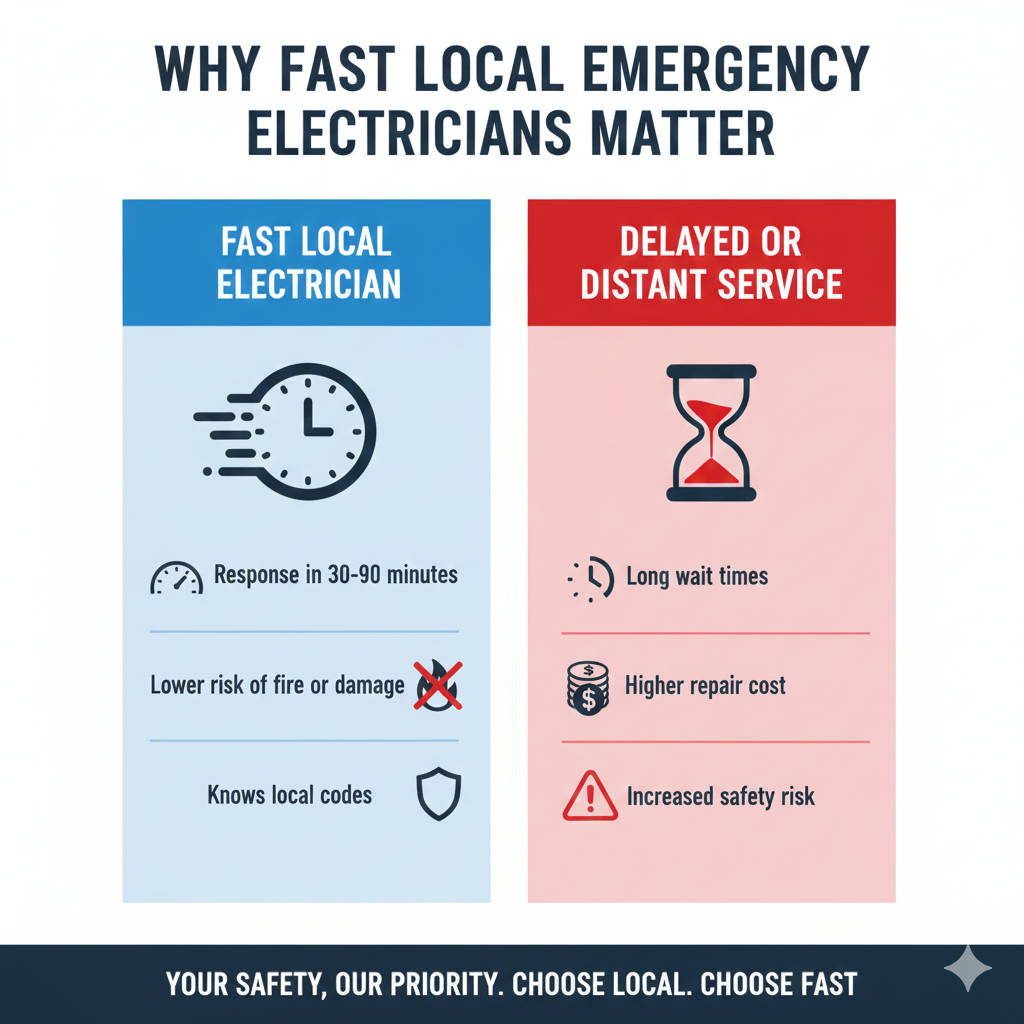
In a crisis, don’t just hire the first person who answers the phone. Verify their credentials to ensure your insurance covers the repair.
1. Verifying Licenses and Insurance
Only hire a licensed and insured contractor. If an unlicensed “handyman” works on your panel and the house later burns down, your insurance company may deny your claim.
2. Checking Recent Reviews
Look for reviews that specifically mention “emergency” or “after-hours.” You want a team that actually shows up at 3:00 AM, not one that just claims to be 24/7 on their website.
Quick Takeaways: Managing Electrical Emergencies
- Prioritize Safety First: Never touch wet outlets or switches. Water makes your home a high-risk zone for electrical shock.
- Kill the Power: If it is dry and safe to do so, turn off your main service panel breaker immediately.
- Identify Red Flags: Call emergency electricians near me if you smell burning plastic or hear buzzing in the walls.
- Handle Water Disasters: When pipes burst near wiring, the situation is an electrical emergency, not just a plumbing one.
- Demand Credentials: Only hire licensed and insured professionals to ensure your repairs meet safety codes.
- Invest in Prevention: Install GFCI outlets in kitchens and bathrooms to provide automatic protection against water-related shorts.
Frequently Asked Questions
1. What qualifies as an electrical emergency during a water leak? An electrical emergency occurs anytime water makes contact with your home’s wiring or outlets. If you notice sparks, smoke, or a burning smell from an outlet after a pipe bursts, you must call for help immediately.
2. Is it safe to reset my breaker if it trips after a flood? No. If your circuit breaker tripping happens during a leak, do not attempt to reset it. A tripped breaker is a safety mechanism. Wait for a licensed and insured professional to inspect the area first.
3. How much does an emergency electrician call-out cost? The cost of emergency electrical call out near me typically includes a dispatch fee ($100–$250) plus increased hourly rates. Most homeowners pay between $300 and $600 for a successful emergency repair visit.
4. Can a leaking water heater cause an electrical fire? Yes. If the tank leaks onto the internal high-voltage wiring, it can cause electrical arcing. You should seek a licensed electrician for water damage to safely disconnect the power.
5. What should I do if my outlets are buzzing or humming? A buzzing sound is a sign of a serious fault. Since this is the sound of electricity “jumping” between wires, it creates intense heat. Shut off the power and contact a pro for troubleshooting and diagnostics.
Conclusion
In an electrical crisis, time is your greatest enemy. Whether you are dealing with a burst pipe, an overflowing toilet, or a failing water heater, the presence of water near your wiring elevates a simple repair into a life-threatening emergency. This guide has outlined the essential steps to protect your property: prioritizing immediate evacuation, safely killing the power at the main breaker, and recognizing critical warning signs like burning smells.
Searching for emergency electricians near me ensures you find a professional with the specialized tools to find hidden hazards behind your walls. By choosing a licensed and insured expert, you protect your home’s integrity and ensure your insurance claims remain valid.
Do not wait for a small spark to become a major fire. If you suspect water has compromised your electrical system, act now. Your safety depends on a rapid, professional response. Keep the number of a trusted local electrician saved in your phone. If you are facing an urgent threat right now, call a 24/7 emergency electrical service immediately to restore safety to your home.
References
Electrical Safety Foundation International (ESFI). (2025). Water-Damaged Electrical Equipment: Disaster Recovery Guide. Retrieved from https://www.esfi.org/water-damaged-electrical-equipment/
HomeAdvisor. (2025). How Much Do Electricians Charge? [2025 Data]. Retrieved from https://www.homeadvisor.com/cost/electrical/hire-an-electrician/
National Fire Protection Association (NFPA). (2025). Home Structure Fires: Electrical Distribution and Lighting Equipment Research. Retrieved from https://www.nfpa.org/education-and-research/research/nfpa-research/fire-statistical-reports/home-structure-fires
U.S. Fire Administration (FEMA). (2025). Residential Building Electrical Fire Trends and Statistics. Retrieved from https://www.usfa.fema.gov/statistics/
Would you like me to help you find a list of highly-rated electricians in your specific zip code to keep on hand?
